-

-
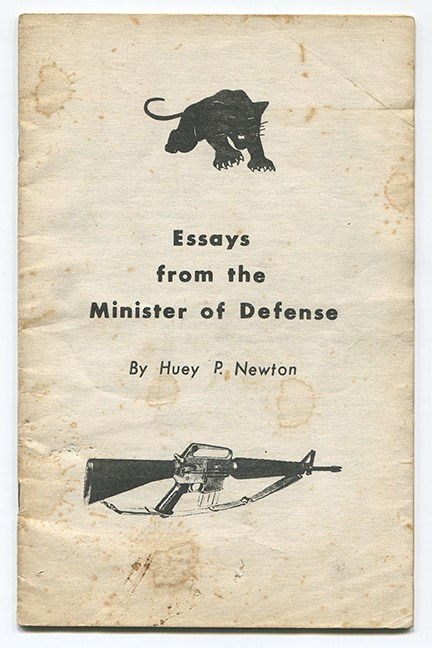
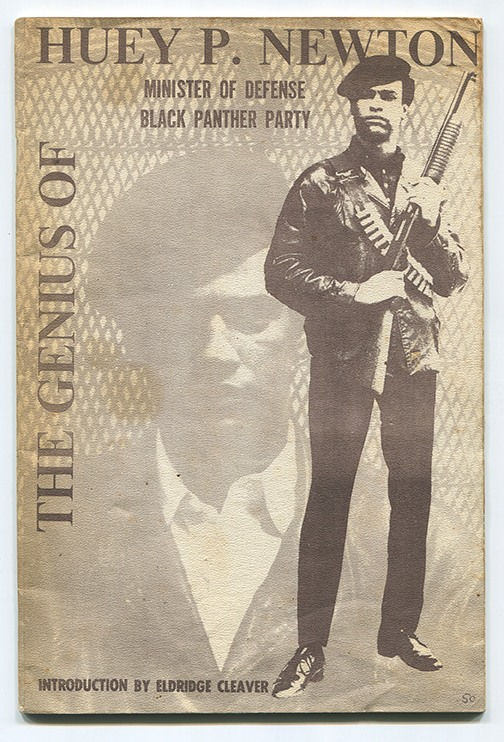
Continuing Resistance: A Century of Black Liberation (1925–2025) positions artistic production within the Black radical tradition as an enduring site of political imagination and insurgent knowledge across a century of practice. Rather than framing resistance as episodic or reactive, the exhibition advances an understanding of resistance as a sustained praxis articulated through visual form, collective authorship, and the ongoing struggle for self-definition against regimes of erasure and containment.
Bringing together contemporary artists alongside historic photographs and ephemera from the Kavi Gupta archive, the exhibition traces a visual genealogy that extends into the present. Across media, these works insist on aesthetic practice as a mode of sovereignty: a space in which representation exceeds documentation to become an act of world-building, refusal, and self-determination.
Spanning generations, the presentation foregrounds the development of visual languages capable of holding both historical memory and speculative futurity. The exhibition proposes that Black liberation is not merely represented through art but materially produced by it; through images that preserve communal memory, contest dominant epistemologies, and expand the conditions of visibility. Within this framework, artistic practice emerges not as symbolic response alone but as durable cultural infrastructure, continuing to shape the political, social, and imaginative horizons of the present.
-
Mary Sibande b. 1982
They Don’t Make Them Like They Used To, 2008
Archival Digital Print
41 1/8 x 27 3/8 in
104.5 x 69.5 cmEdition of 10 plus 1 artist's proof
-
Mary Sibande
-
-
Mary Sibande is a South African sculptor, painter, and installation artist whose work interrogates the intersections of race, gender, and labor in South Africa, while actively rewriting her own family’s legacy of forced domestic work under the Apartheid state. Sibande employs the human form as a vehicle for her focused critiques of stereotypical depictions of Black women in South Africa. Understanding the body as a site where history is contested and where an artist’s fantasies can play out, Sibande constructs counter-historical narratives in which her alter-ego, a persona by the name of Sophie, is the central protagonist. Sibande creates sculptural depictions of Sophie dressed in various uniforms that signify the cultural roles she is taking on. Her outfits mobilize color as a vehicle for meaning and context. In Sophie’s “Blue Phase,” she is seen in blue and white outfits typical of those worn by domestic workers in South Africa. In her “Purple Phase”—inspired by South Africa’s notorious Purple Rain Protest—Sophie is dressed in elegant, Victorian garments suggestive of power and influence. In her “Red Phase,” Sophie’s outfits take on a warrior countenance, as she has now entered a stage of evolution defined by righteous anger.
-
Mary Sibande b. 1982
Everything is not lost, 2011
Archival Digital Print, Ed. of 10
49 5/8 x 34 1/4 in
126 x 87 cmEdition of 10
-
Based in Johannesburg, Sibande has taken part in the 2011 Venice Biennale as the representative of South Africa; Lyon Biennial; Dakar Biennial; and Havana Biennial, among others. She has exhibited internationally in leading museums, including the Met Breuer, New York, USA; British Museum, London, UK; Zeitz MOCAA, Cape Town, South Africa; JAG (Johannesburg Art Gallery), Johannesburg, South Africa; Boston Museum of Fine Art, Boston, USA; Musée d’art Contemporain de Lyon, France; Iziko South African National Gallery, Cape Town, South Africa; Museum of Contemporary Art, Rio de Janeiro, Brazil; Kiasma Museum for Contemporary Art, Helsinki, Finland; Museum Beelden aan Zee, Hague, Netherlands; and Somerset House, London, UK; the Frist Art Museum, Nashville, TN; the Museum of Arts and Design, New York, NY; among others. In 2021, Sibande received the prestigious Helgaard Steyn Prize for her sculpture In the Midst of Chaos, There Is Opportunity. Sibande’s works are included in prominent collections internationally, such as the Smithsonian National Museum of African Art, Washington, DC, USA; Virginia Museum of Fine Art, Richmond, USA; Norton Museum of Art, Palm Beach, USA; UMMA (University of Michigan Museum of Art), Ann Arbor, USA; Museum of Contemporary Photography, Chicago, USA; Zeitz MOCCA, Cape Town, South Africa; Musée d’Art Contemporain du Val-de-Marne, France; and Iziko South African Museums, Cape Town, South Africa. Forthcoming exhibitions include Mary Sibande: Blue Red Purple at the Frist Art Museum, Nashville, USA, and her work is currently on view at Frac Nouvelle-Aquitaine MÉCA in Bordeaux, France.
In 2024 Mary Sibande wa awarded the Chevalier des Arts et des Lettres (Knight of the Order of Arts and Letters) by the French government. The awards, presented by David Martinon, the French ambassador to South Africa, Lesotho and Malawi, recognised Sibande's contributions to the arts and the cultural ties between the two nations. Established in 1957, the Chevalier des Arts et des Lettres celebrates individuals who have significantly advanced the arts and literature globally.
-
Alfred Conteh
-
-
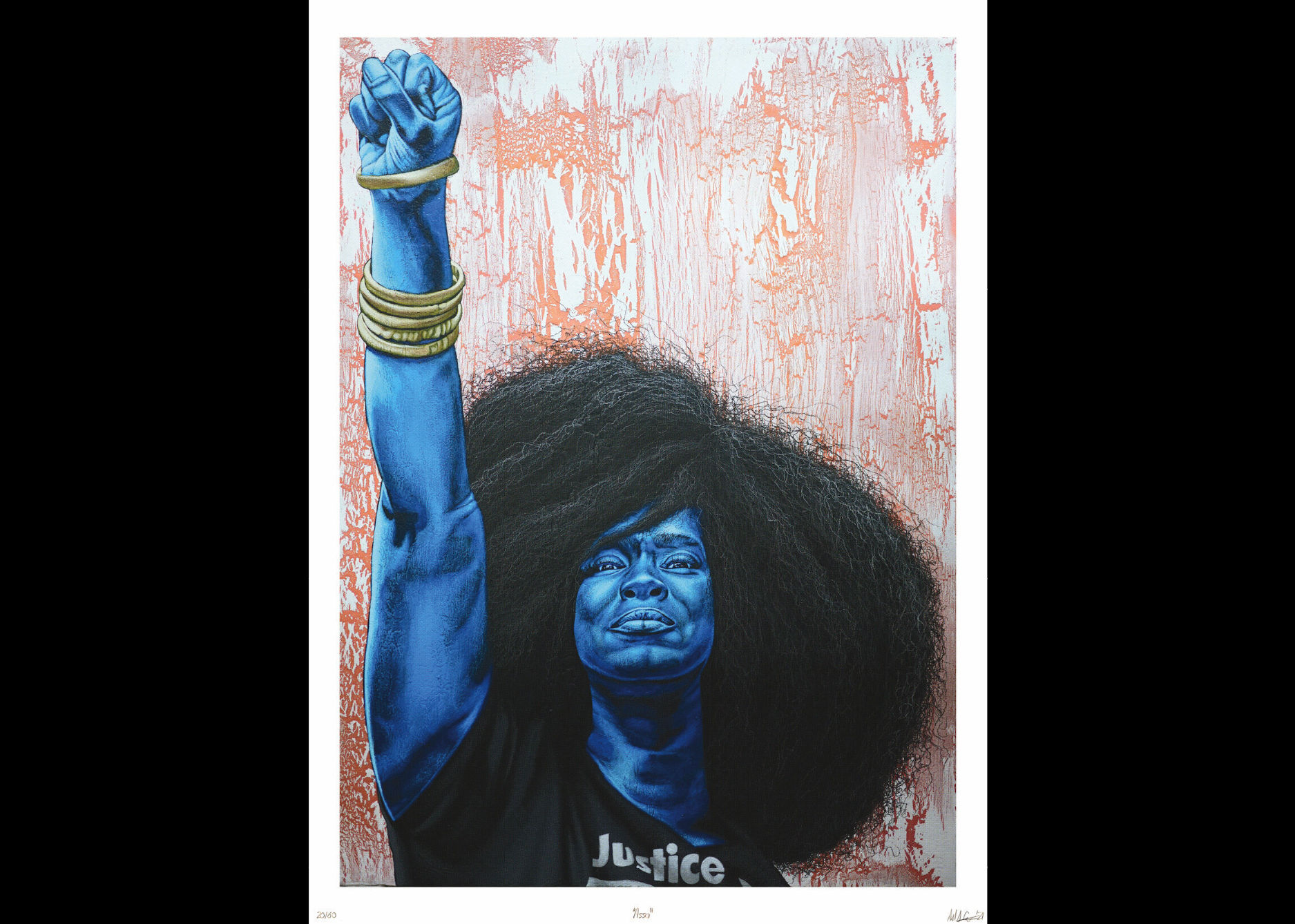
Alfred Conteh is a leader on the vanguard of American portraiture. He uses his studio practice to explore his identity and personal history from a number of different perspectives. Born in Fort Valley, GA, and based in Atlanta, his mother is African American and his father is from Sierra Leone, West Africa. Conteh’s work concerns the ways African Americans are dealing with disparities that have been affecting their communities for generations, especially in the Southern United States. Conteh’s paintings utilize materiality to elucidate the ways in which America subjugates its Black citizens by neglecting the infrastructure of Black neighborhoods and systematically denying Black citizens access to all the rights and privileges afforded to the majoritarian culture.
-
Alfred Conteh
Assa, 2021
Serigraph
30 x 22 in.
76.2 x 55.9 cm -
Conteh’s paintings utilize materiality to elucidate the ways in which America subjugates its Black citizens by neglecting the infrastructure of Black neighborhoods and systematically denying Black citizens access to all the rights and privileges afforded to the majoritarian culture. Conteh’s long running series of figurative paintings, titled Two Fronts, explores images of contemporary members of the African diaspora, placing the figures in what are often mundane environments. The subjects of these portraits are the Black people Conteh meets and interacts with around the city of Atlanta, where he lives and works. The surfaces of the paintings look weathered, rusted, and degraded thanks to Conteh’s deft use of materials such as battery acid, rust, soil, and melted plastic. The material presence of the paintings is a reflection of the lives of Conteh’s sitters, who, as Conteh points out, do not have access to the full vision of American-ness. Conteh’s meticulous observation of his sitters, his careful presentation of their clothing and countenance, and the highly emotive and perceptive way that he conveys them inhabiting their surroundings, adds to the profound sense of truthful humanity conveyed by the figures in his paintings.
“This body of work is a visual exploration of how African diasporal societies in the South are fighting social, economic, educational, and psychological wars from within and without to survive. The honest and false narratives of history embodied in this series are primarily personified in patinated colossuses that commemorate the people, culture, and battles that the populations they tower over have fought and continue to fight. We are at war on two fronts.”
- Alfred Conteh
-
Recent major exhibitions of Conteh's work include Alfred Conteh: The Sweet Spot, Clark Atlanta University Art Museum, Atlanta, GA; Men of Change: Power. Triumph. Truth., Smithsonian Institution Traveling Exhibition Service; Visions of a Cultural Commentator, curated by Madeline Beck, Cobb Marietta Museum of Art, Marietta, GA; Alfred Conteh, Selected Works, Harriet Tubman Museum, Macon, GA; and 5 Perspectives, Steffan Thomas Museum of Art, Madison, GA. Conteh's work is included in several major collections, including that of the The Legacy Museum, Montgomery, AL; the Lauren Rogers Museum of Art, Laurel, MS; Clark Atlanta University Art Museum, Atlanta, GA; and several others.
-
Stephan Shames
-
-
Stephen Shames was the official photographer of the Black Panther Party, the revolutionary group who fought for racial equality in the United States and supported communities nationwide. Shames testified about child poverty to the United States Senate in 1986. Shames was named a Purpose Prize Fellow in 2010 by Encore.org for his work helping AIDS orphans and former child soldiers in Africa. His works are held in museums collections worldwide including MoMa, The Metropolitan Museum & The National Portrait Gallery, USA. While Shames has photographed a vast array of subjects—from political leaders to ordinary people across diverse cultures—a unifying thread runs through his photos: an exploration of what divides and unites us. His images of children and families reveal stories of violence, abuse, love, hope, and transcendence, offering a window into the complexities of the human experience.
-
Stephen Shames b. 1947
Angela Davis Portfolio
21 archival photographs
Portfolio Edition of 10Paper: 14 x 11 in.
Image: 12 x 8 in.
Frame: 17 1/4 x 13 1/4 x 1 1/4 in. -
Curator Maurice Berger wrote in the New York Times “Mr. Shames’s exacting photographs were in keep-ing with a movement that often disseminated its ideas through imagery.” During his nearly 60 years as a photographer, Shames photographed youth in urban ghettos, homeless kids sleeping in parks and beach-es in the United Staes, and street kids, child laborers, and soldiers who lived by their wits on the streets of Asia, Eastern Europe, and South America. Shames pictured many of society’s outcasts but his photos are not only images of victims; his photos are also about inner strength and hope. Shames’ work is held in the permanent collections of museums world wide including MoMa, the Met-ropolitan Museum of Art, the San Francisco Museum of Modern Art, National Portrait Gallery, Wash-ington D.C. and countless others.
-
Ernie Barnes
-
-
Ernie Barnes began his career as an offensive lineman - playing pro football for six seasons with the San Diego Chargers, the New York Titans, and the Denver Broncos. Eventually, Barnes grew disillusioned with the conflict. Barnes attended North Carolina College as an art major on full athletic scholarship. Ed Wilson, who taught sculpting, had a remarkable impact on Barnes. First, he taught him about the work of the early 20th century African American artists. Then, he taught him how to translate his athleticism on the field to the canvas. Barnes populated his canvasses with elongated forms full of movement and was influenced by the Italian Mannerist painters, as well as Thomas Hart Benton and Charles White. His personal style was accessible and resonated soundly with people.
-
Ernie Barnes
Untitled, c. 1971-1975
Oil on canvas
39 x 46 1/2 in
99.1 x 118.1 cm -
-
-
-
Barnes’s work has been the focus of a powerful wave of institutional attention, underscoring the breadth and cultural urgency of his legacy. The California African American Museum’s 2019 retrospective offered the most expansive view of his practice to date, bringing together paintings, archival material, and personal ephemera to trace the evolution of his visual language and reaffirm the enduring resonance of The Sugar Shack. From 2018 to 2019, the North Carolina Museum of History anchored his story in the region that shaped him, exploring how his early life in the South informed the emotional tenor and kinetic sensibility of his canvases. Subsequent presentations have expanded his reach into new critical contexts: UTA Artist Space in Los Angeles mounted Ernie Barnes: Liberating Humanity from Within in 2020, highlighting the spiritual dimension and expressive force of his later work; in 2024, Andrew Kreps Gallery and Ortuzar Projects in New York presented Ernie Barnes: In Rapture, a five-decade survey that illuminated the ecstatic physicality that defines his oeuvre; and in 2025, the Mint Museum in Charlotte placed The Sugar Shack on view for the first time in Barnes’s home state, offering a poignant return for the painting that influenced generations.
-
Gerald Williams
-
-
Gerald Williams is an American painter whose work explores culture, place and identity from a global perspective. Williams is one of the original five founders of AFRICOBRA, an internationally influential Black arts collective formed on the South Side of Chicago in 1967. Williams’ paintings depict a polyrhythmic visual representation of life at the intersection of figuration and abstraction. Defined by what he calls “mimesis at midpoint,” his images unfold in a liminal space between what we can see and describe objectively, and what must be thought or felt intuitively. In addition to the influence AFRICOBRA has had on his development as an artist, the distinctive aesthetic style Williams employs has been informed by a lifetime of international travel and a diverse range of professional, intellectual and aesthetic experiences. After serving in the U.S. Air Force for four years, Williams earned his BA from Chicago Teachers College in 1969, and his MFA from Howard University in 1976. He served two years in the Peace Corps as Prevocational Director in the Jacaranda School for the Mentally Handicapped in Nairobi, Kenya, then taught for four years in the Washington, D.C. public schools. From 1984 through 2005, Williams served as the Director of Arts and Crafts Centers on United States Air Force bases in South Korea, Japan, Italy, the Azores and the United States. Williams distills the visual languages of the various places, cultures and identities he has encountered in order to express the essence of reality in an aesthetically contemplative way. The quiet nights in Nairobi; the rich colors of African clothing and architecture; the dynamic rhythms of life in the country and the city: all of these things affect his approach, and inform his polyrhythmic visual voice.
-
-
Williams’ work is included in several major collections, including that of the Smart Museum of Art, the Brooklyn Museum, the DeYoung Museum, and the DuSable Museum of African American History. Recent exhibitions of Williams' work include Everything Is Connected: Art and Conspiracy, The Met Breuer, NY, USA; AFRICOBRA: Nation Time, 2019 Venice Biennale Official Collateral Event, Venice, IT; AFRICOBRA: Messages to the People, MOCA North Miami, FL, USA; AFRICOBRA 50, Kavi Gupta, Chicago, USA; Soul of a Nation: Art in the Age of Black Power, Tate Modern, London, England; Crystal Bridges Museum of American Art, Fayetteville, AR; USA, Brooklyn Museum, NY, USA; The Broad Museum, Los Angeles, CA, USA; San Francisco MOMA, CA, USA, Museum of Fine Arts, Houston, TX, USA; Gerald Williams, Kavi Gupta, Chicago, USA; The Time is Now! Art Worlds of Chicago’s South Side, 1960-1980, Smart Museum of Art, Chicago, USA. A major profile of Williams appeared in Hyperallergic in 2018, based on an oral history included in the Smithsonian Archives of American Art.
-
Jae Jarrell
-
-
Jae Jarrell is an American sculptor, painter and fashion designer. She is one of the original five founders of AFRICOBRA, a globally influential Black arts collective founded on the South Side of Chicago in 1967. Jarrell’s most illustrious creations are wearable artworks, which reflect the social and aesthetic philosophies of AFRICOBRA. The history of these works began in Cleveland, Ohio, where Jarrell was born and raised. Her grandfather was a tailor, and her uncle was a haberdasher. She and her mother frequented vintage clothing stores, admiring how the outfits were made. Teaching herself to sew, she made her own clothing by combining outfits she collected from second hand stores, reveling in the fact that her fashion was unique and had a secret, vintage past.
-
-
Major exhibitions of Jarrell's work include AFRICOBRA: Nation Time, 2019 Venice Biennale,Official Collateral Event, Venice, IT; AFRICOBRA: Messages to the People, MOCA North Miami, FL, USA; AFRICOBRA 50, Kavi Gupta, Chicago, USA; Soul of a Nation: Art in the Age of Black Power, Tate Modern, London, England; Crystal Bridges Museum of American Art, Fayetteville, AR; USA, Brooklyn Museum, NY, USA; The Broad Museum, Los Angeles, CA, USA; San Francisco MOMA, CA, USA, Museum of Fine Arts, Houston, TX, USA; We Wanted a Revolution: Black Radical Women, 1965–85, ICA Boston, MA, USA; and Heritage: Wadsworth and Jae Jarrell, The Cleveland Museum of Art, OH, USA. Jarrell’s works are in the permanent collection of the Brooklyn Museum and many other institutions. She lives and works in Cleveland, OH.
-
Emory Douglas
-
-
The former Minister of Culture and Revolutionary Artist for the Black Panther Party, Douglas helped define the aesthetics of protest at the height of the Civil Rights era, cementing his status among the 20th century's most influential radical political artists. Throughout the 1960s and 1970s, he designed all but one of the Party's newspapers, each issue marked by the artist's bold, figurative illustrations outlined in thick black line and contrasted with bright colors, block text, and photomontage. The clearly rendered imagery, applied to a range of printed media from newspapers to posters, notecards, and pins, became a hallmark of liberation movements around the world, as supporters calling for an end to the oppression and subjugation of Black, Indigenous, and other communities sought to project a spirit of shared struggle through a common artistic vocabulary. Douglas was born in Grand Rapids, Michigan. In 1951, his family relocated to San Francisco, where he continues to live today. Widely known as an epicenter of radical countercultural politics in the post-World War II era, the city was also deeply divided and segregated, and it was the injustices that Douglas observed as a child that informed his political ideology as an adult. Beginning in the early 1960s, as a student of commercial art at City College of San Francisco, Douglas made frequent trips to nearby San Francisco State University to see civil rights leaders like Amiri Baraka, Stokely Carmichael, and H. Rap Brown speak. He soon lent his talents to the nascent Black Arts Movement, creating fliers and other promotional artworks to advertise events held across the city. These formative experiences solidified his intentions to dedicate his work to the broader struggle for Black liberation that was taking shape around him.
-
In January 1967, Douglas met Huey Newton and Bobby Seale, two young activists from nearby Oakland, who, months earlier, had founded the Black Panther Party (BPP). Black self-determination was the Party's primary motivation, seeking to improve the position of underprivileged people of color in America through "whatever means necessary." The organization initially focused on an individual's right to bear arms for defense against police violence, but its attention eventually turned to social justice issues like free breakfast for school children and fair housing. Seeking to promote their civil rights agenda to a primarily Black American audience, the Panthers developed a newspaper, the first of which Seale created and published in April 1967. That first issue was simple in layout and design, leading Douglas to offer his expertise in print production, understanding the power that strong visuals could lend to political action. Beginning with the second, he designed every issue thereafter-some 537 newspapers, from 1967 until it ceased publication in the early 1980s. Douglas quickly rose through the ranks of the organization: he was officially named its Revolutionary Artist and, eventually, Minister of Culture, overseeing all aspects of the BPP visual identity. Douglas's familiarity with the print production process was a fruitful asset, as he employed simple tools like markers, rub-off type, and prefabricated texture materials to create his visually impactful designs. To keep costs low, each paper was printed in one or two colors-black ink, often with a contrasting bright color. His illustrations shone a spotlight on state-sanctioned brutality, depicting law enforcement officers and politicians as pigs, while also portraying Black people bearing arms and defeating their oppressors. Some issues featured images of Black suffering, lambasting the political establishment for failing to meet the basic needs of people of color across the United States. Douglas strategically employed photomontage as well, integrating photographs alongside text and illustrations to emphasize urgent issues facing the Party. The impact and influence of Douglas's designs underscored the importance of a consistent graphic strategy in conveying complex political messages in very simple terms. This success was underscored by the massive global distribution of the newspaper and the frequent use of Douglas's illustrations in the political campaigns for organizations like the Organización de Solidaridad con los Pueblos de Asia, África y América Latina, Organization of Solidarity with the People of Asia, Africa, and Latin America, known as OSPAAAL. Despite the popularity of the Panthers' programs and their frequent struggle against the established white political order, the Party was disbanded in the early 1980s. Douglas continues to work as a political artist and activist, producing work that seamlessly translates complex political issues into easily understood illustration, a hallmark of the pieces he produced as a member of the Panthers. His striking figural illustrations connect him to generations of American artists like Elizabeth Catlett, Aaron Douglas, and Charles White, while his combining of type and image draw on generations of political art emanating from across the world, including contemporaries working in Cuba during the Communist Revolution. Deeply bound to American history and politics, his imagery evokes a powerful, globally resonant narrative.
-
James Van Der Zee
-
-
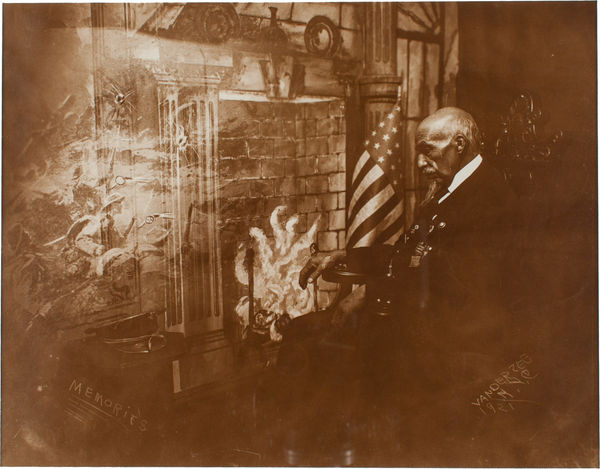
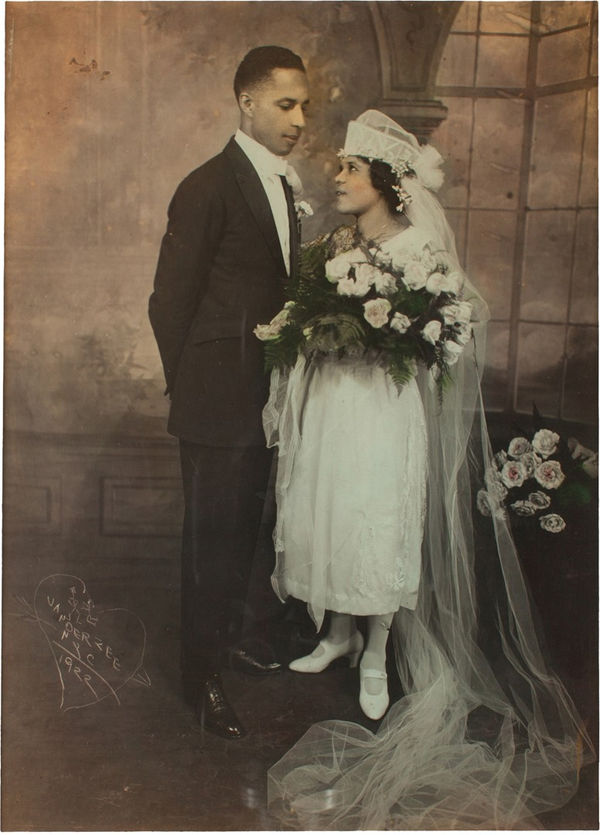
James Van Der Zee (b. 1886 – d. 1983) began his love affair with photography in 1900. Ambitious and forward thinking,
Van Der Zee began developing his own photographs in high school, and continued to pursue photography both personally and professionally after he moved to Harlem, New York, in 1906. By 1916 he opened his own studio, and while he primarily operated as a commercial photographer, he became one of the few artists of his day to document working-class African Americans.
-
Working primarily in his Harlem studio, Van Der Zee’s photographs range from formal portraits of families and couples to striking group compositions and staged tableaux, each infused with a careful attention to gesture, fashion, and environment. His work preserves a nuanced vision of early 20th-century Black life—celebratory, aspirational, and deeply human.
-
-
Van Der Zee’s legacy extends beyond the studio; his images have become icons of the Harlem Renaissance, embodying both the dignity and complexity of a transformative cultural moment. Through his lens, Van Der Zee crafted not only portraits but enduring narratives that continue to shape our understanding of history, identity, and community.
-
Kerry James Marshall
-
-
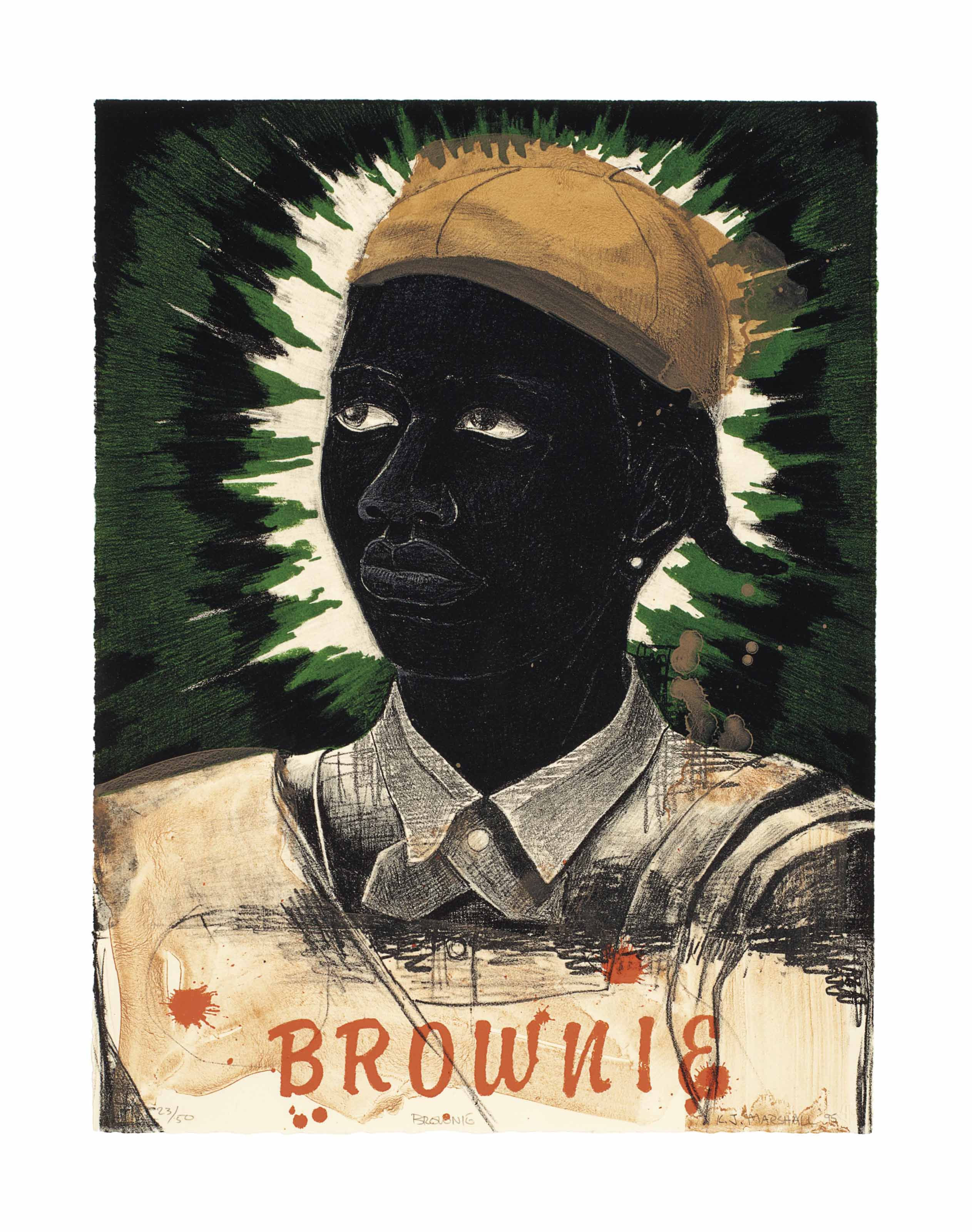
Kerry James Marshall was born in 1955 in Birmingham, Alabama. The subject matter of his paintings, installations, and public projects is drawn from African American culture and rooted in the geography of his upbringing: in 1963 he moved with his family to the Nickerson Gardens public housing project in the Watts district of Los Angeles, just a few years before the race riots began. Marshall was educated at the Otis Art Institute in Los Angeles, where he received a bachelor’s degree in fine arts in 1978 and an honorary doctorate in 1999. As a student, he was greatly influenced by the African American social realist painter Charles White, a professor at Otis.
-
Kerry James Marshall b. 1955
Brownie, 1995
Lithograph
19 3/4 × 15 in
50.2 × 38.1 cmEdition of 50
-
Since the late 1970s, Marshall has exhibited widely throughout Europe and the United States. In 2018, Kerry James Marshall: Collected Works was presented at the Rennie Museum in Vancouver and Kerry James Marshall: Works on Paper at The Cleveland Museum of Art. Kerry James Marshall: Mastry, the first major museum survey of the artist’s work, was on view at the Museum of Contemporary Art Chicago, followed by The Met Breuer, New York, and the Museum of Contemporary Art, Los Angeles. In 2013, Marshall's work was the subject of a major survey entitled Kerry James Marshall: Painting and Other Stuff. The exhibition was first on view at the Museum van Hedendaagse Kunst Antwerpen in Antwerp. In 2014, it traveled to the Kunsthal Charlottenborg in Copenhagen and was co-hosted by two venues in Spain, the Fundació Antoni Tàpies in Barcelona and the Museo Nacional Centro de Arte Reina Sofía in Madrid. The largest survey of the artist's work in the United Kingdom to date, Kerry James Marshall: The Histories, was presented at the Royal Academy of Arts, London, in 2025. The exhibition travels to Kunsthaus Zürich and Musée d’Art Moderne de Paris through 2027. Other prominent institutions that have presented solo shows include the National Gallery of Art, Washington, DC (2013); Secession, Vienna (2012); Vancouver Art Gallery (2010); San Francisco Museum of Modern Art (2009); and the Wexner Center for the Arts, Columbus, Ohio (2008). Previous traveling solo exhibitions include those organized by the Camden Arts Centre, London (2005), Museum of Contemporary Art Chicago (2003), and The Renaissance Society at the University of Chicago (1998). In 2023, Marshall unveiled his stained-glass window commission for the Washington National Cathedral, Washington, DC. The artist has been the recipient of many awards and honors. The Royal Academy, London, elected the artist as an Honorary Royal Academician in 2023. Marshall received the 2019 W. E. B. Du Bois Medal, which is considered Harvard University's highest honor in the field of African and African American studies. In 2016, the artist was the recipient of the Rosenberger Medal given by The University of Chicago for outstanding achievement in the creative and performing arts. In 2014, he received the Wolfgang Hahn Prize, an award given annually by the Gesellschaft für Moderne Kunst at the Museum Ludwig in Cologne. In 2013, he was one of seven new appointees named to President Barack Obama's Committee on the Arts and the Humanities. Other prestigious awards include a 1997 grant from the MacArthur Foundation and a 1991 fellowship from the National Endowment for the Arts. Museum collections which hold works by the artist include the Art Institute of Chicago; Los Angeles County Museum of Art; The Metropolitan Museum of Art, New York; Museum of Contemporary Art Chicago; The Museum of Modern Art, New York; National Gallery of Art, Washington, DC; San Francisco Museum of Modern Art; The Studio Museum in Harlem, New York; Walker Art Center, Minneapolis; and the Whitney Museum of American Art, New York. Marshall lives and works in Chicago."
-
Nikko Washington
-
-
Nikko Washington is a multimedia artist from the Hyde Park neighborhood of Chicago. His work is rooted in portraiture, and frequently centers the artists, activists, and influencers who have made an impact on his community. A believer in the idea that if people don’t learn from their history they’ll repeat it, Washington makes work that archives and contextualizes the present moment through the lens of mythology and storytelling. The subject of fighting appears frequently in Washington’s work. A trained martial artist and boxer, he portrays legendary fighters like Muhammad Ali, Floyd Mayweather, and Mike Tyson as larger than life figures emulating the gladiators of the past. Boxing is also one lens through which Washington addresses ideas surrounding racial identity and equity. Referring to the 1910 title fight between Jack Johnson, who was Black, and the white fighter James J. Jeffries, a.k.a. The Great White Hope, Washington says, “With racial issues, American nature sort of has this caveat of both sides betting on each other to lose.”
-
Nikko Washington b. 1993
Jack II, 2021
Oil and spray paint on canvas
40 x 30 x 2 in
101.6 x 76.2 x 5.1 cm -
Washington’s studio practice is also deeply influenced by the fighting arts. He has used punching bags, boxing gloves, and riot shields as material elements in his work. His practice is also informed by the less obvious mental aspects of the fighting arts, such as precision and discipline. “The push and pull of the physical and the mental, grappling in the studio with my work—boxing gave me mind and body control that is similar to the mental head space of painting,” Washington says. Washington’s visual language conveys a sense of heroism in his figures. His style marries Mannerist-inspired figuration with highly emotive abstract markings, w with brightly colored, gestural brush strokes expressing movement and constant evolution. Stars appear frequently in his work, suggesting a range of symbolic meanings from the celestial to the celebrity to the political.
-
Kori Newkirk
-
-
Kori Newkirk is an American multidisciplinary artist whose work spans sculpture, installation, photography and painting, often addressing themes of the body, landscape and the complexities of social structures. Born in 1970 in the Bronx, Newkirk’s art incorporates a wide range of materials and approaches, often using everyday materials, found objects and unconventional methods to challenge perceptions of both art and culture.
-
Kori Newkirk b.1970
Void of Silence, 2007
2001 C large photo mounted on plexi and di bond
40 x 50 in.
101.6 x 127 cm -
His first solo museum exhibition—a ten-year survey—was presented at the Studio Museum in Harlem in 2007. Subsequent solo exhibitions followed at Roberts & Tilton Gallery; the Museum of California Art; the Orange County Museum of Art; the Museum of Contemporary Art San Diego; the Museum of Contemporary Art Cleveland; the Art Gallery of Ontario; LAXART; the Fabric Workshop and Museum; Locust Projects; and Deep River. His work has also been included in significant group exhibitions at the Whitney Biennial; the Dakar Biennale; Serpentine Galleries; the Museum of Contemporary Art Chicago; the Hammer Museum; and the Museum of Contemporary Art Los Angeles. Newkirk is the recipient of grants and fellowships from FOCA, Art Matters, the Louis Comfort Tiffany Foundation; the California Community Foundation; the William H. Johnson Foundation; and the Joan Mitchell Foundation. He has held dual appointments at the Otis College of Art and Design and the School of the Art Institute of Chicago, and served on the faculty of the USC Roski School of Art and Design.
-
Glenn Ligon
-
-
Glenn Ligon is a visual artist whose works operate simultaneously as aesthetic phenomena and objects of provocation that upend the expected relationship between viewers and art. Ligon is most well known for his text-based works, which appropriate bits of existing text from a diverse range of sources, including protest signs, and written works by authors such as Jean Genet, Zora Neale Hurston, Gertrude Stein, and Richard Pryor. Layering the words so heavily that the letters and words become like intense visual echoes, it is as if Ligon is creating something that demands to be read, while at the same time corrupting legibility.
Ligon’s work is rooted in an examination of Black identity within the context of American history, literature, and society. It builds critically on the legacies of modern painting and conceptual art. Ligon’s works go beyond an engagement with individuals and objects; they invite viewers to question the entire system of culture of which they are part, elegantly suggesting that the modes and structures and systems we are used to are mutable, thus raising the question of whether and how we want them to change.
-
Glenn Ligon b. 1960
Untitled (Rodney King), 1994
signed Glenn Ligon and dated '94 (lower right)
Oil stick, pencil, and ink
15 1/2 x 63 inches
-
In 2011 the Whitney Museum of American Art held a mid-career retrospective of Ligon's work, Glenn Ligon: America, organized by Scott Rothkopf, that traveled nationally. Important shows include Glenn Ligon: Encounters and Collisions (2015), a curatorial project organized with Nottingham Contemporary and Tate Liverpool; and Blue Black (2017), an exhibition Ligon curated at the Pulitzer Arts Foundation in St. Louis, inspired by the site-specific Ellsworth Kelly wall. Ligon has also been the subject of solo museum exhibitions at the Camden Arts Centre in London, the Power Plant in Toronto, the Walker Art Center in Minneapolis, and the Studio Museum in Harlem, among others. His work has been included in major international exhibitions, including the Venice Biennale (2015 and 1997), Berlin Biennale (2014), Istanbul Biennial (2011), Documenta XI (2002), and Gwangju Biennale (2000).
-
Theaster Gates
-
-
Theaster Gates acts as an urban planner, educator, composer, and social catalyst to integrate his artworks into everyday social contexts and collapse the separation between art and life. His collaborations with researchers, architects, and performers result in multisensory artworks that are presented in both gallery settings and venues typically devoid of art. His work unearths issues of cultural fusion and revitalizes found materials. His practice as an artist involves disciplines that are pivotal in the formation and revision of dynamic communities. Gates’s ongoing projects include the Dorchester, a group of rehabbed buildings on Chicago’s South Side that houses cultural archives preserved when businesses closed or intended to dispose of their inventory.
-
Theaster Gates
b. 1973
Stack 6901.17, 2011
White concrete, pulverized glass and carpet
48 x 12 in
121.9 x 30.5 cm -
Exhibitions
-
-
Continuing Resistance: A Century of Black Liberation (1925-2025) : Kavi Gupta | Washington Blvd. Fl. 1W
Current viewing_room










!['I call attention to the absence of a Black presence [in art history].' -Kerry James Marshall](https://static-assets.artlogic.net/w_620,h_620,c_limit,f_auto,fl_lossy,q_auto/ws-kavigupta/usr/images/feature_panels/image/items/e3/e3e154927958450988d4df291c64e0d5/portrait-of-artist-kerry-james-marshall-photo-by-jo-allen-2018.jpeg)