-

-
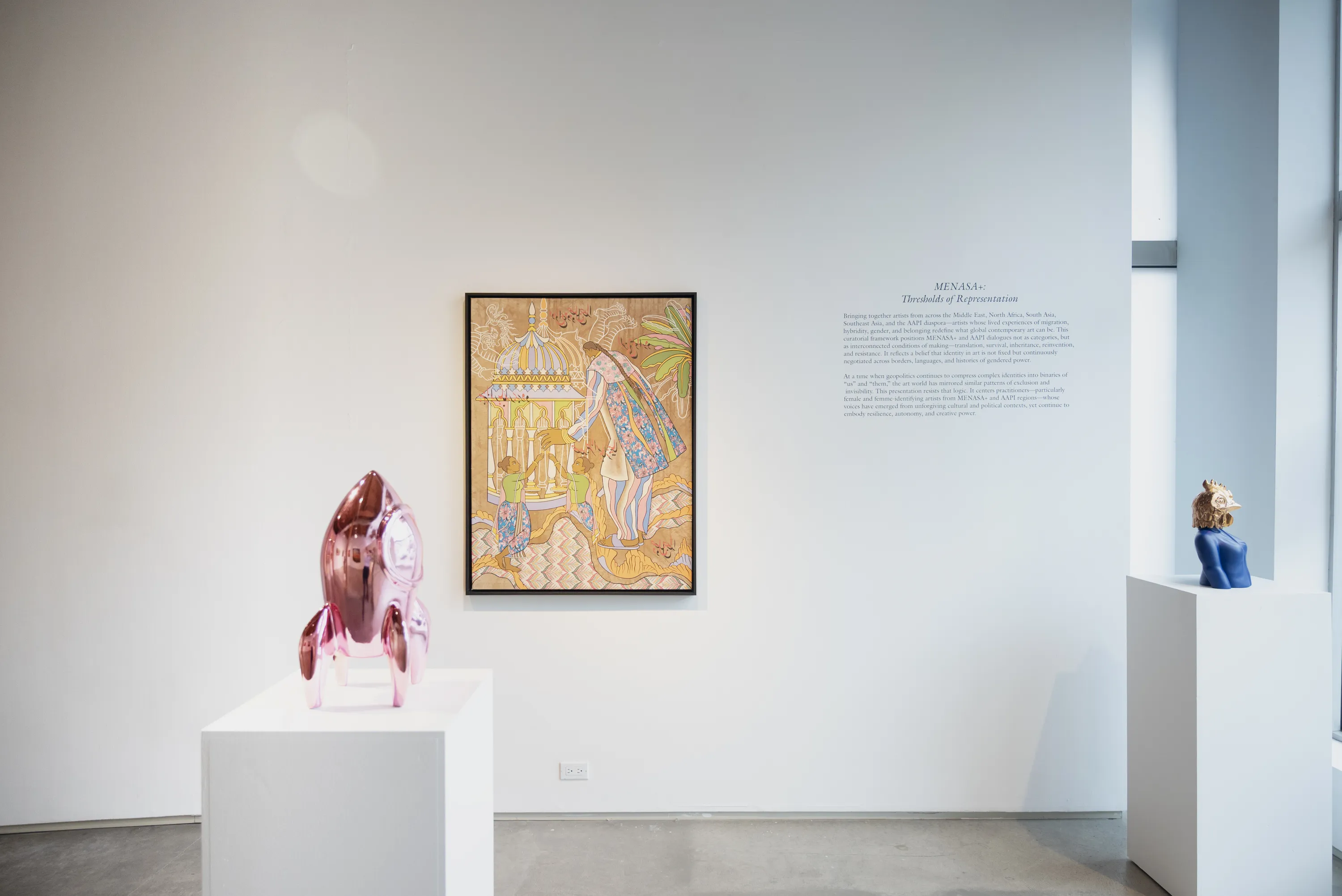
Kavi Gupta amplifies voices of diverse and underrepresented artists to expand the canon of art history. The presentation; MENASA+: Thresholds of Representation, extends our commitment to amplifying global voices that shape the contemporary moment. It brings together artists from across the Middle East, North Africa, South Asia, Southeast Asia, and the Asian diaspora— artists whose lived experiences of migration, hybridity, gender, and belonging redefine what global contemporary art can be.
-
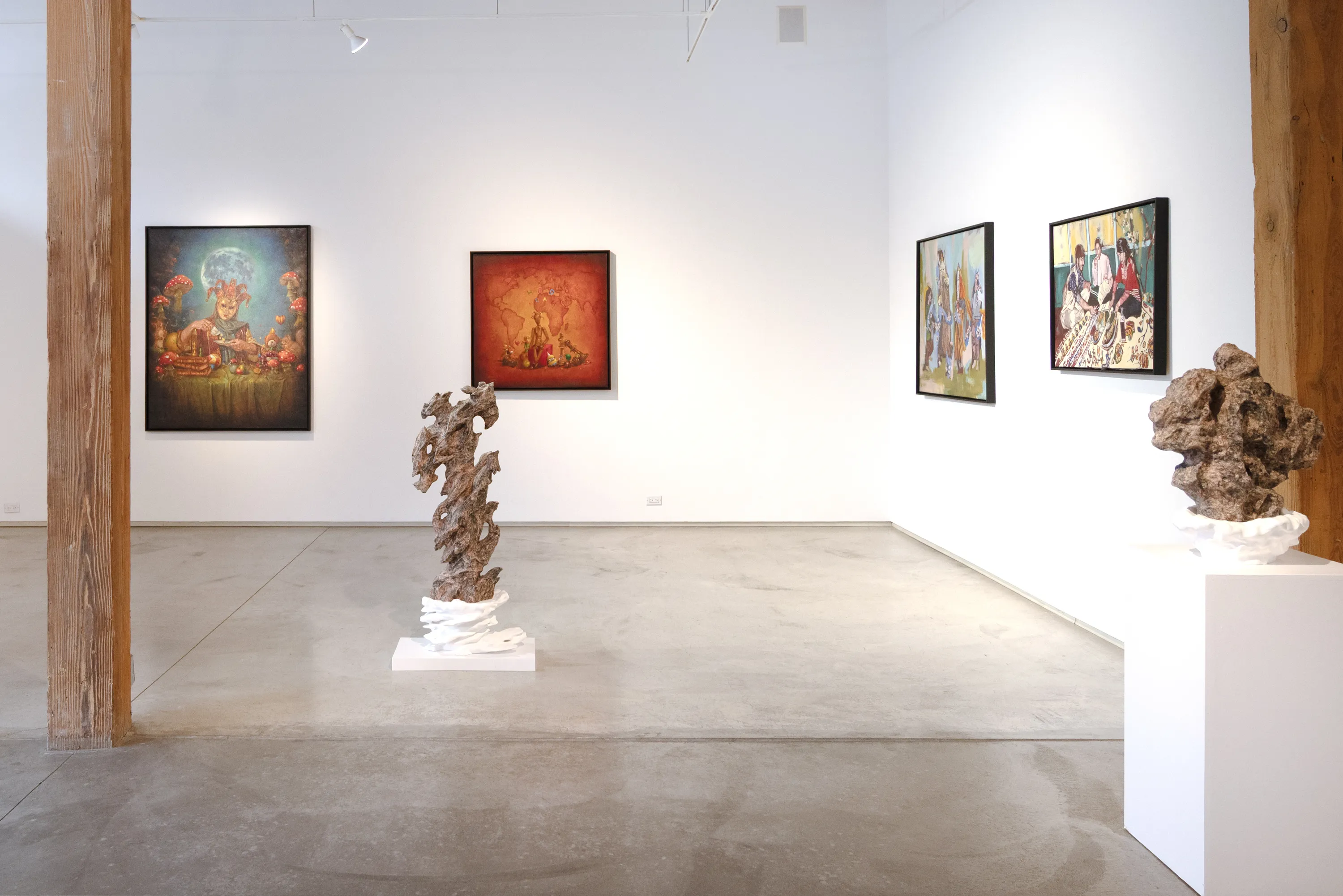
Installation View; MENASA+: Thresholds of Representation; Kavi Gupta | Washington Blvd.
-
Alemeh Bagherian
-
-
Alemeh Bagherian's works are rooted in a background informed by traditional Persian carpet design. Bagherian’s practice incorporates myth, imagery, and cultural memory, utilizing layers of Persian motifs, drawn largely from the Shahnameh (Epic of Kings), onto paintings of sensual female figures, celebrating the enduring beauty and complexity of womanhood within Persian culture. Written between 977 and 1010 by the poet Ferdowsi (940–1020), the Shahnameh is regarded as a repository of Persian language and identity. Composed entirely of words of Persian origin and filled with chronicles of ancient Persian kings, the text emerged after the seventh-century Islamic conquest of Persia, during a period when Arab rulers attempted to suppress the Persian language in favor of Arabic. Bagherian’s work draws from these narratives. By weaving Shahnameh imagery into her paintings, she affirms and reclaims her cultural heritage. Her meticulous attention to detail brings a captivating intricacy to each piece, while her figures convey a layered mix of sensuality, introspection, pleasure, and pain.
-
Alemeh Bagherian b. 1984
Beyond the Mask, 2025
Oil on canvas
47 1/4 x 59 in.
(120 x 150 cm)Alemeh Bagherian explores the feminine figure through a modern and symbolic lens, using oil paint to layer emotion, narrative, and myth. Symbols play a central role in her compositions, each object chosen with intention. Bagherian’s paintings invite the viewer to decode visual metaphors and step into a surreal world where emotion and symbolism coalesce.
This work emerges from Bagherian’s ongoing inquiry into the boundaries between dream and reality, narrative and stillness. Through a symbolic and theatrical visual language, Bagherian constructs a liminal world where identity dissolves, and time becomes fluid. The masked central figure resists definition- embodying not a singular persona, but the archetype of the performer, the dreamer, the storyteller is revealed from within.
The surrounding objects-vintage books, toys, oversized mushrooms, a teacup-serve as symbolic fragments of memory, childhood, wisdom, and fantasy. Each element is charged with metaphor, inviting the viewer into an intimate space of visual decoding and emotional resonance
Working in oil, Bagherian treats the medium as both sensual and conceptual; a vehicle through which inner landscapes can surface. This piece seeks to invite reflection, evoke subconscious associations, and create a bridge between personal mythology and collective imagination.
-
Alemeh Bagherian b. 1984
The Birth of Humanity, 2025
Oil on canvas
39 1/4 x 39 1/4 in.
(100 x 100 cm) -
Bagherian has presented numerous solo exhibitions internationally, including shows at the Women United Art Movement in Vémyslice, Czech Republic (2024); Seyhoun Art Gallery (2021, 2018, 2016); Liliya Art Gallery (2021); 1912 Gallery (2020); the International Izmir Art Biennial (2015); as well as exhibitions at Rooz Art Gallery, East Art Gallery, and Shahed Art Gallery in Tehran. Her work has also been widely included in group exhibitions such as East to West and Echoes of Persia at Parseen Art Gallery (2025, 2024); Rooted Trees organized by UNESCO (traveling); Artful Expression and Creative Iranian Women at the South Asia Institute; Women Life Freedom at A+C Gallery (2022); the World Art Exhibition at the Dubai World Trade Centre; Veiled Bodies at Liliya Art Gallery (London); exhibitions with Capital Art at Asia House in London; international exhibitions with LinArt in Istanbul; and the 4th Fajr International Festival of Visual Arts (2011). Alemeh Bagherian, was born in Ghaemshahr (Qaem Shahr), a coastal town in northern Iran along the Caspian Sea, she lives and works in Tehran. Bagherian is a member of the Society of Iranian Painters.
-
Installation View; MENASA+: Thresholds of Representation; Kavi Gupta | Washington Blvd.
-
SHAHPARI RAHMANI
-
-
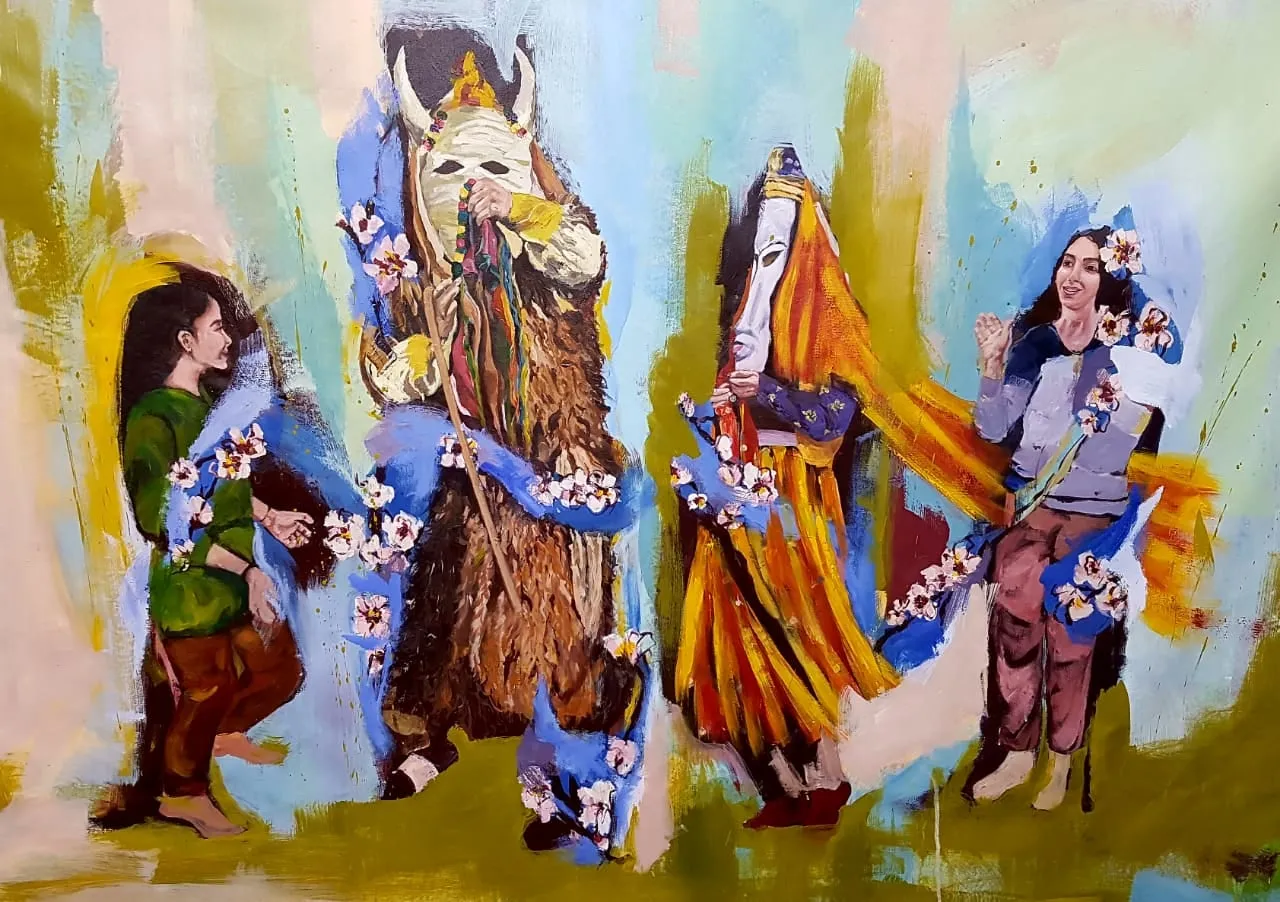
Shahpari Rahmani is an Iranian painter whose work maps the psychic terrain of contemporary life through a highly textural, expressive visual language. Rooted in her formal training at Alzahra University—where she earned degrees in Graphic Design, Painting, and a Master’s in Painting—Rahmani's practice threads together material rigor with an acute sensitivity to cultural memory. Working primarily in acrylic and mixed media on canvas, Rahmani builds chromatic, atmospheric fields that oscillate between abstraction and figuration. Her surfaces carry the imprint of layered gestures, unruly marks, and spectral silhouettes, evoking states of uprising, rupture, and renewal. Across her paintings, the figure often appears dissolved or reconstituted—an emblem of both vulnerability and insistence.
-
Shahpari Rahmani
And That's How You Stay, 2020
Acrylic on canvas
39 3/8 x 47 1/4 in.
(100 x 120 cm) -
Shahpari Rahmani
And That's How You Stay, 2020
Acrylic on canvas
27 1/2 x 39 3/8 in.
(70 x 100 cm) -
Rahmani’s work has been exhibited across Tehran, including presentations at Ginos Gallery, Farhangsarai Ferdous Gallery, and Milad Tower Gallery. Her recent pieces extend her ongoing inquiry into the body as a site of transformation, questioning how personal and collective narratives are shaped, obscured, or reclaimed through gesture. Rahmani positions painting as an arena where memory, myth, and interior life converge. Her canvases stand as charged thresholds, inviting viewers into spaces where emotion becomes material and where visibility itself becomes an act of agency.
-
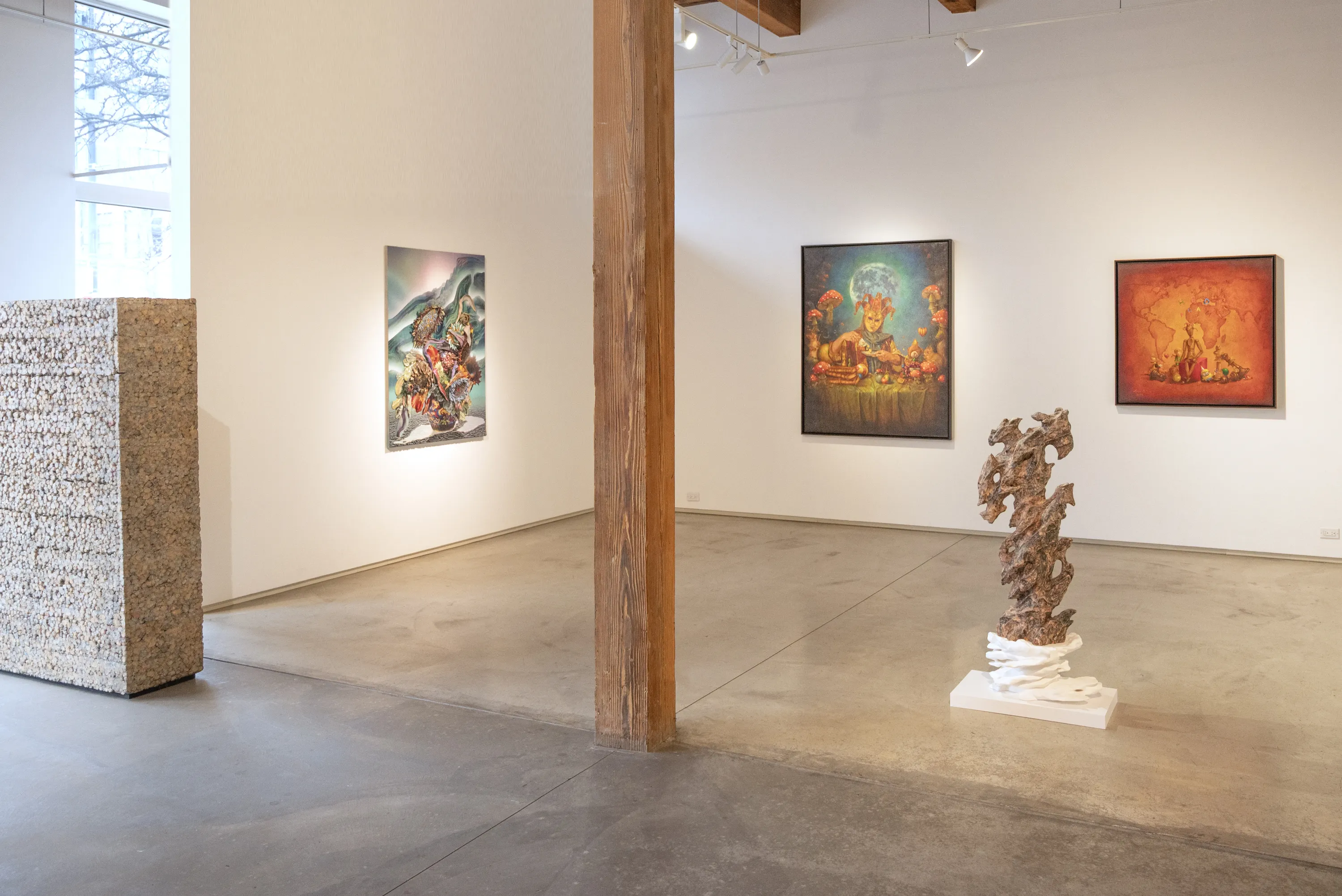
Installation View; MENASA+: Thresholds of Representation; Kavi Gupta | Washington Blvd.
-
GORDON CHEUNG
-
-
Gordon Cheung has developed a multidisciplinary practice working across virtual and actual realities, to reflect on the existential questions of what it means to be human in civilisations with histories written by victors. Utilizing sculpture, painting, and digital media; Cheung merges virtual and physical realities through his works, constructing atmospheric worlds that confront the existential conditions of contemporary life. Cheung's practice interrogates a culture shaped by accelerated capitalism, algorithmic governance, and histories authored by dominant powers. His hybrid visual language draws from cultural mythology, religious symbolism, geopolitical spectacle, and the poetics of diaspora, forming hallucinatory, urban-surreal terrains that echo his own in-between identity and the psychological space of global precarity.
-
Gordon Cheung b. 1975
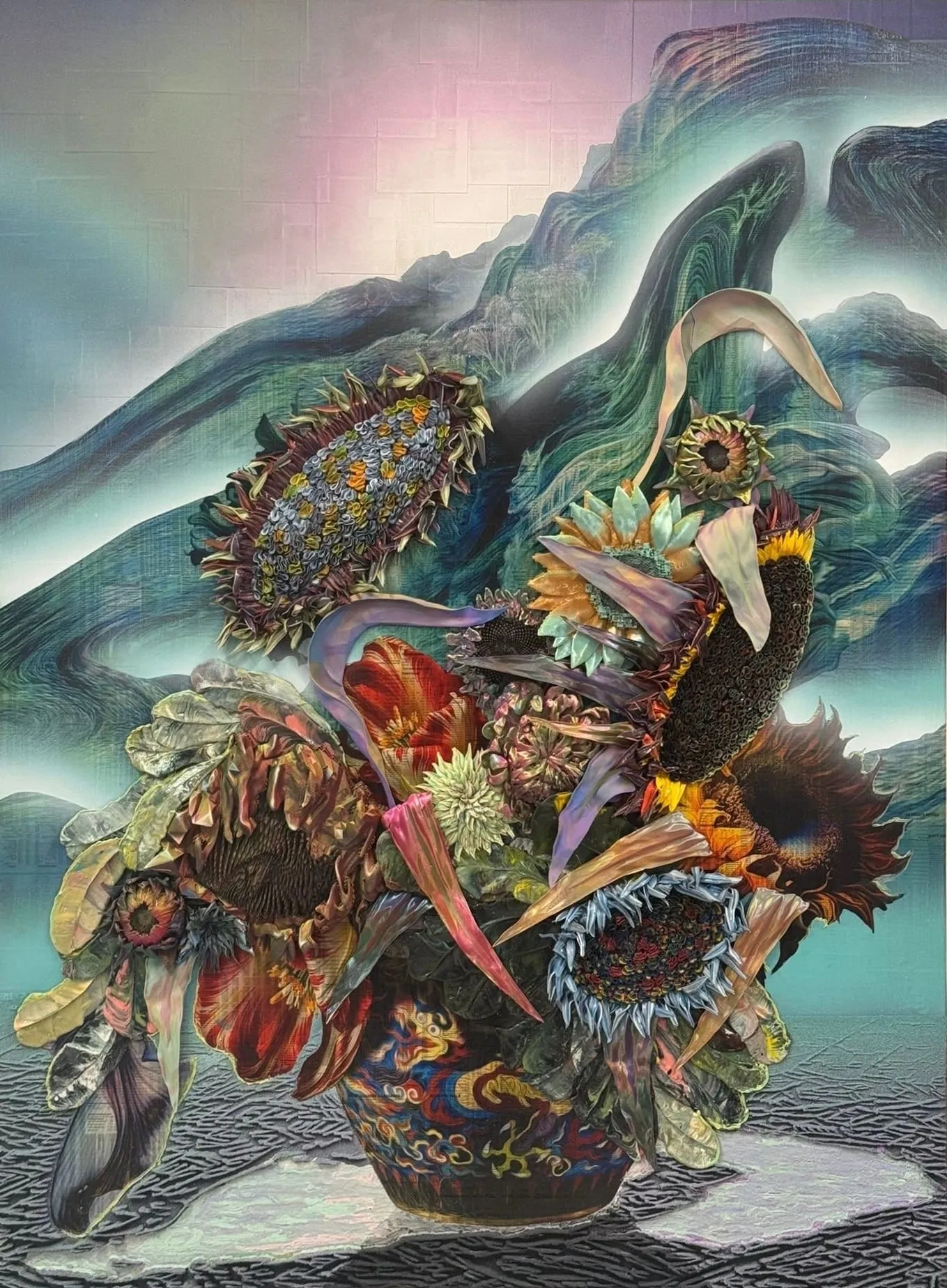
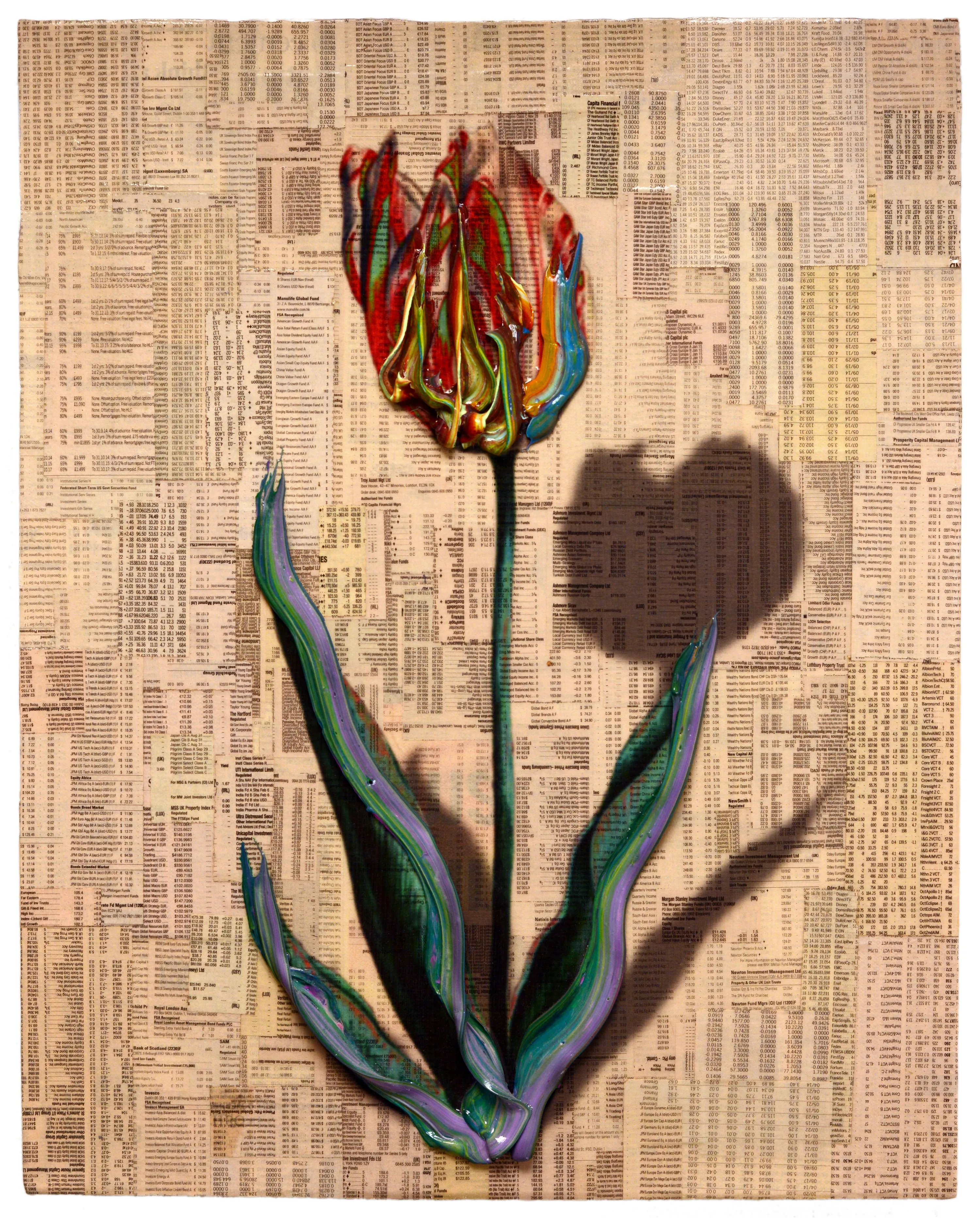
Legend of Lake (Nanjing), 2025
Financial Times newspaper, archival inkjet, acrylic, PLA filament and sand on linen
53 x 39 1/2 x 1 in.
(135 x 100 x 2.5 cm)In this painting, the background landscape references a distorted Chinese Imperial scroll depicting the Forty Views of Yuanmingyuan (Beijing’s Old Summer Palace), much of which was looted and dispersed into European collections and now survives as one of the last visual records of the so-called “Garden of Gardens.” The destruction of Yuanmingyuan during the Anglo-French Second Opium War—when thousands of troops burned and pillaged an area comparable in scale to Manhattan’s Central Park—forms a historical backdrop to the work. In the foreground, one of contemporary China’s leading GDP cities emerges in sharp contrast, positioned beneath history’s lingering presence, which hovers like an aurora across the composition.
Auroras and mountains function symbolically as thresholds between earth and heaven, linking temporal and metaphysical realms. The still life elements draw upon the traditions of Dutch Golden Age painting, a genre that often reflected on the fragility of life and the futility of material excess. This period also marked the emergence of modern capitalism, including the speculative tulip market collapse widely regarded as one of the first recorded financial crashes. Simultaneously, Dutch imperial wealth expanded through global trade networks shaped by colonization, slavery, and militarized commerce.
The tulip carries layered cultural symbolism: in Turkey it signified divine presence, while in the Netherlands it became an emblem of status and the fleeting nature of beauty. References to stock listings throughout the composition evoke the financial systems structuring contemporary global life. Collectively, the painting presents a contemplative space that considers humanity’s pursuit of knowledge—economic, scientific, and technological—alongside the enduring costs of progress, including environmental degradation, alienation, and inequality. -
-
Gordon Cheung b. 1975
De Admirael van der Eyck (Tuilpbook), 2013
Financial newspaper, archival inkjet and acrylic on canvas
19 1/2 x 16 x 2 in.
(50 x 40 x 5 cm)The Tulip Paradox captures the contradiction at the heart of tulipmania, where the delicate tulip, a symbol of fleeting elegance, became a vehicle for financial frenzy. Tulips bloom briefly, a transient beauty, yet during the 17th century, they fueled an irrational speculative bubble, with prices soaring to absurd heights before inevitably collapsing. The paradox lies in how something so ephemeral became entangled in human constructs of value and greed.
Visually this concept is illustrated as a collision of organic and artificial elements: the vibrant 3d printed blooms of tulips juxtaposed with stock market lists, a matrix of financial symbols, and surreal datascapes. It reflects the layered tensions where the fragility of nature clashes with the raw chaos of human economic systems. The tulip’s natural cycle of growth and decay becomes a metaphor for speculative booms and busts, a pattern we see rhyming endlessly in history, from the Dutch Golden Age to today’s Bitcoin that in a full circle twist has been accused of being a tulip bubble.
In Tulip Paradox, beauty becomes a trap, value becomes illusion, and nature becomes a stage for human folly. It reflects the fragile dance between what is real and what we choose to believe.
-
Gordon Cheung b. 1975
Rising Power, 2023
Financial Times newspaper, wood glue and polystyrene on thermoplastic polymer
47 x 19 x 12 1/2 in.
(120 x 48 x 32 cm)The sculpture adopts the form of a traditional Chinese scholar’s rock—historically conceived as a microcosm of landscape and a meditative bridge between nature and civilization. Constructed from compressed Financial Times newspapers, the work assumes the mass of a mountain stone, resting upon an inverted cloud-like base that mirrors its contours. Together, these elements establish a suspended condition between earth and heaven, grounding the work in both material density and metaphysical ambiguity.
Its surface has been sanded to expose layered strata of text, reading like geological sediment. These embedded fragments of financial language evoke deep time, suggesting a landscape of information shaped by the high-velocity circulations of global capital—flows that generate utopian promise and dystopian consequence in equal measure. In this way, the work articulates an “ancient future,” where speculative horizons are already fossilized within the present.
Occupying a liminal zone between the natural and the digital, the work reflects our shifting experience of time and space, and the ways in which human consciousness continues to negotiate meaning within the accelerating conditions of modernity.
-
Cheung earned his BFA in Painting from Central Saint Martins, London, in 1998, followed by an MFA from the Royal College of Art in 2001. His work has been the subject of numerous solo exhibitions, including presentations at The New Art Gallery Walsall, UK (The Four Horsemen of the Apocalypse); Cristea Gallery, London (The Light that Burns Twice as Bright); Nottingham Castle Museum and Art Gallery, UK (Here Be Dragons); and Ann Norton Sculpture Gardens, West Palm Beach, FL (New Order Vanitas). Cheung’s work is held in major public collections, including the Museum of Modern Art, New York; the Hirshhorn Museum and Sculpture Garden, Washington, D.C.; The Whitworth, Manchester; the Royal College of Art, London; and the British Museum, among others.
-
Installation View; MENASA+: Thresholds of Representation; Kavi Gupta | Washington Blvd.
-
MANISH NAI
-
-
Manish Nai is on the vanguard of contemporary abstraction. His studio practice is rooted strongly in materiality and process, especially as those elements relate to daily life in Mumbai, India, where Nai lives and works. Nai prioritizes materials that are both modest and quintessentially interconnected to his surroundings, such as jute, newspaper, indigo dye, second hand books and clothing, and reclaimed metal and paper. He fashions these materials into elegant geometric forms, while allowing them to retain their natural textures and colors. Many of Nai’s pieces are studies in tedious complexities, such as the long term effects of water, light, or gravity on organic materials. Nai is particularly interested in the ways materials evolve over the course of months and years. His works can be interpreted as visual expressions of the compression of time.
-
Manish Nai b. 1980
Untitled, 2017
Natural and dyed jute cloth, gateway tracing paper and paint on canvas
(Installed in 3 vertical panels)99 1/2 x 124 1/2 in
252.7 x 316.2 cmThis painting by Manish Nai offers insight into the artists desire to express something inward looking out of the chaos of his surroundings. The work is made from recycled jute and paper, materials ubiquitous in Mumbai where Nai lives and works. The jute is dyed blue with indigo, another material intimately connected with India, past and present. Works such as this take Nai months, and sometimes years to produce. The materials are intricately compressed and layered in order to create compositions that at first, perhaps, might seem simple. The longer one spends with the work, the more complexities arise out of it. This, according to Nai, is an expression of the dichotomy of life in contemporary India, where activity, noise, and crowds are as essential to everyday life as a search for privacy, simplicity, and inner quietude.
-
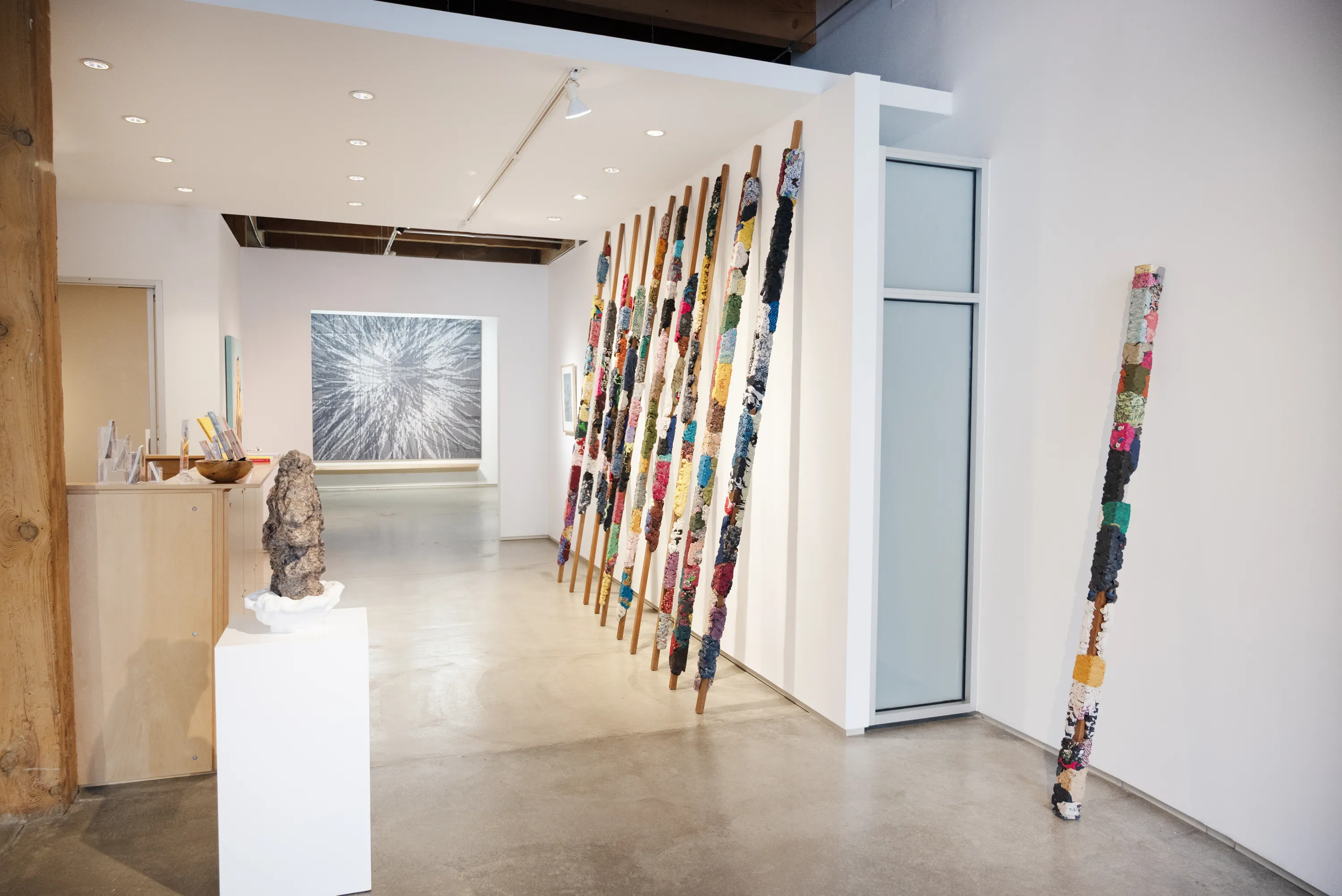
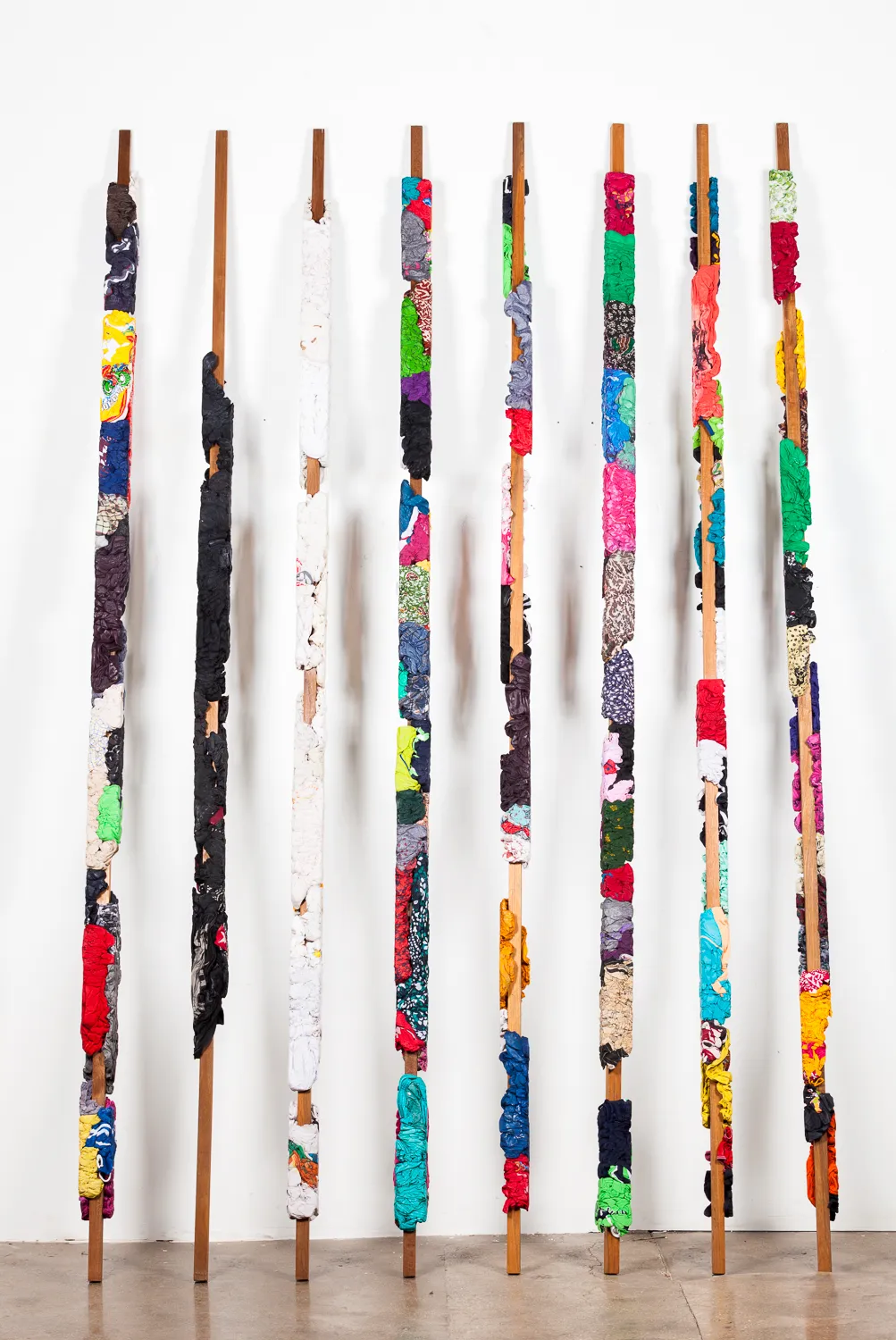
Manish Nai b. 1980
Untitled, 2017
Used clothes and wood
120 x 3 x 3 in each, installation variable
304.8 x 7.6 x 7.6 cm each, installation variableTextiles, especially in the form of clothing, tell a story. A pattern, color, or texture speaks to a time and place, and its form in a garment speaks to the kind of person who would wear it. Nai's compressed clothing works become intergenerational conversations, timelines, and family trees where the patterned shawl so iconic to his grandmother's generation can be twisted with a cartoon graphic t-shirt from his young son. Compressed into minimalist pillars reminiscent of architecture, Nai is similarly interested in cross-generational cohabitation, a practice common in India but often foreign to Westerners. Three, four, even five generations living in a single home is not uncommon, Nai has explained, and the mixing of their garments in laundry becomes a kind of intimate snapshot, a family photo in physical form.
Nai's pillars have innumerable variations for installation, each possible arrangement responsive to its environment and inspiring new possibilities for the audience. Leaning at angles, hanging straight, or stacked in pyramids are among the incarnations the pillars have taken over time, each creating new questions, historical references, and visual experiences, unique to their situation.
-
Nai represented India in the 9th Shanghai Biennale, Mumbai City Pavilion, Shanghai, China, and is a Pollock-Krasner Foundation Award winner. His work has been exhibited by some of the most influential institutions in the world, including Het Noordbrabants Museum, Netherlands; Fondation Fernet-Branca, Saint-Louis, France; Devi Art Foundation, Kasturbhai Lalbhai Museum, Ahmedabad, India; Bhau Daji Lad Museum, Mumbai, India; NTU Center for Contemporary Art Singapore, Gillman Barracks, Singapore; Museum of Modern Art in Warsaw, Poland; The Sculpture Park at Madhavendra Palace, Nahargrah Fort, Jaipur, India; DR. Bhau Daji Lad Museum, Mumbai, India; Art Science Museum, Singapore; Birla Academy of Art & Culture, Kolkata, India; National Gallery of Modern Art, Mumbai, India; and Beppu Museum, Beppu, Japan. Nai earned a Diploma in Drawing and Painting from the L.S. Raheja School of Art in Mumbai, India.
-
SARA RAHANJAM
-
-
Born and raised in Iran, Sara Rahanjam's practice emerges from the lived realities of women in Iran—realities circumscribed by cultural and traditional systems that have dictated the boundaries of freedom and expression. Through her work, she channels these experiences into a broader dialogue about the collective longing for transformation that defies contemporary Iranian society. In her paintings, sculptures, performances, and writings, Rahanjam reflects the tension between endurance and rebellion. Each gesture—whether a brushstroke, a repositioning of figures, a line of text, or a composed sound—embodies both a protest and an act of reclamation. Rahanjam's work bears witness to limitations imposed upon women, and to reveal the strength, beauty, and intellect that persist in defiance of those constraints. Engaging deeply with the perspectives, needs, and pains shared among her community, Rahanjam creates works that resonate with emotional intensity. Her practice operates as both mirror and megaphone.Through this interplay of personal narrative and collective consciousness, she transforms private struggle into public discourse. At once poetic and political, Rahanjam’s work balances the refinement of aesthetic inquiry with the force of advocacy. She aspires to inspire contemplation, evoke empathy, and catalyze change—transforming art into a vehicle for awakening. Through her practice, Rahanjam continues to advance a vision of cultural and social evolution rooted in the unwavering pursuit of equality.
-
Sara Rahanjam b. 1984
Silent Poultry series, 2021
Bronze, fiberglass
7 1/8 x 5 7/8 x 4 3/4 in.
18 x 15 x 12 cmSara Rahanjam’s Silent Poultry presents a series of surreal sculptures that bring together the languages of the body, ornament, and silence. Each work features a pair of vividly colored lips, cast in fiberglass, from which bronze legs emerge forming an uncanny hybrid that balances allure with unease. The forms extend Rahanjam’s ongoing interest in fragmented bodies, confronting the ways women have historically been reduced to isolated, sexualized parts within dominant visual culture.
The lips function as a charged threshold: the site where speech begins but may also be restrained. From this opening, the bronze legs introduce movement and consequence, suggesting the trajectory of words once they leave the body—their ability to travel, provoke, transform, or be suppressed. Through this surreal gesture, Rahanjam materializes the relationship between voice and action, expression and control.
The sculptures are adorned with gul-u-morḡ, the traditional Persian bird-and-flower motif associated with finely detailed depictions of blossoms, birds, and other natural forms. Prominent in Persian decorative arts from the 17th century onward and widely circulated during the Zand Dynasty (c. 1750–1779), the motif historically symbolized the relationship between lover and beloved, with the rose representing beauty and the bird the human spirit. By applying this ornamental language to contemporary sculptural forms, Rahanjam bridges Iran’s visual heritage with present-day concerns.
Silent Poultry emerges within a broader climate of political urgency shaped in part by the Woman, Life, Freedom movement in Iran, where questions of voice, bodily autonomy, and visibility have taken on renewed significance. Without illustrating these events directly, Rahanjam’s sculptures resonate with the complexities of speaking and being heard under conditions where expression can carry profound personal and collective consequences. Oscillating between elegance and absurdity, intimacy and estrangement, the works invite viewers to consider whether the forms they encounter signal emergence, metamorphosis, or silencing. In Rahanjam’s hands, the act of speech becomes sculptural—at once fragile and forceful, intimate and public
-
Installation View; MENASA+: Thresholds of Representation; Kavi Gupta | Washington Blvd.
-
-
Sara RahanjamSpring Series, 2025Fiberglass, Bronze, Oil/Acrylic15 3/4 x 9 7/8 x 9 7/8 in.
(40 x 25 x 25 cm) -
Sara RahanjamSpring Series, 2025Fiberglass, Bronze, Oil/Acrylic15 3/4 x 9 7/8 x 9 7/8 in.
(40 x 25 x 25 cm) -
Sara RahanjamSpring Series, 2025Fiberglass, Bronze, Oil/Acrylic15 3/4 x 9 7/8 x 9 7/8 in.
(40 x 25 x 25 cm)
-
-
Since 2012, Sara Rahanjam has engaged with the visual language of conflict—crafting sculptural forms that reinterpret the iconography of war through a deeply personal and human lens. In her Objects of War series, rockets, bombs, and gas masks are reimagined not as weapons, but as vessels of reflection—repositories for fear, resilience, and collective memory.
The sculptures juxtapose polished, futuristic forms with intricate, hand-painted motifs drawn from Persian miniature painting. This fusion of tradition and modernity transforms instruments of destruction into objects of beauty and contemplation. The delicate ornamentation—floral vines, mythic figures, and radiant explosions—renders the surfaces alive with tension, embodying the collision between cultural heritage and technological violence.
Living in the Middle East, Rahanjam describes existing “under the shadows of war; a wound that never truly heals.” Her work seeks not to aestheticize violence but to understand it—to trace how fear and trauma can coexist with faith, creativity, and survival.
In the wake of renewed geopolitical unrest, these sculptures resonate with renewed urgency. Their gleaming exteriors mirror both the seductive allure and the devastating consequence of power. Through them, Rahanjam invites viewers to confront the paradox of beauty born from ruin—to see, within the machinery of destruction, the indelible persistence of human spirit.
-
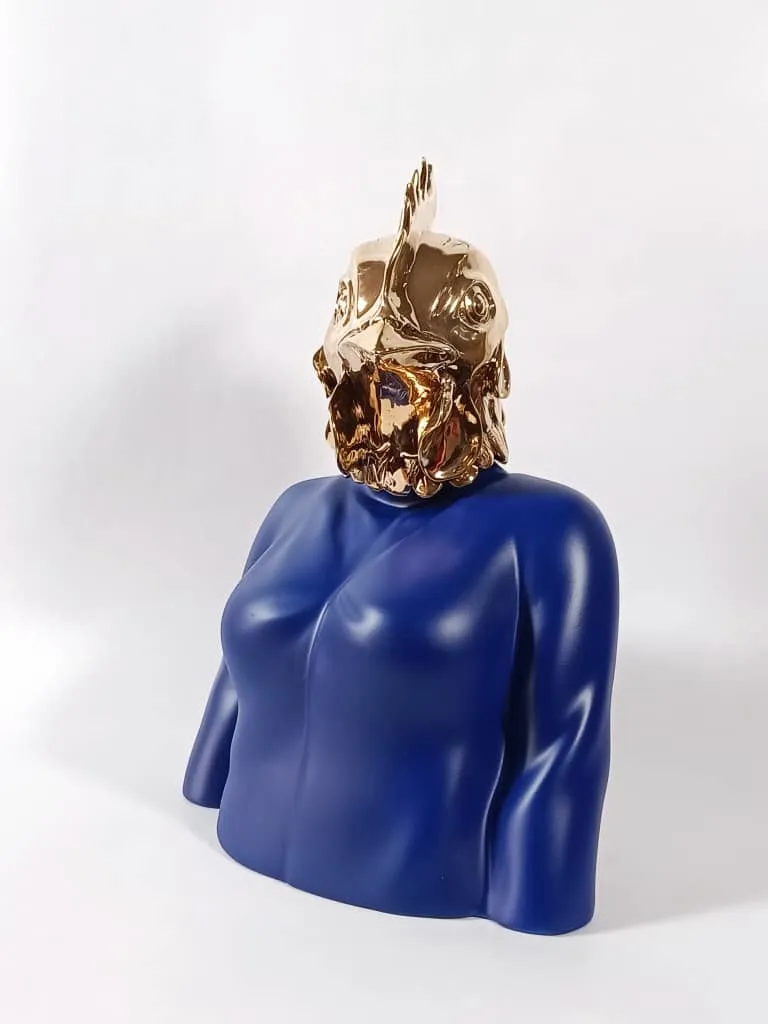
Sara Rahanjam b. 1984
Stranger Series, 2024
Fiberglass and bronze
Edition 3/515 3/8 x 9 7/8 x 5 7/8 in.
39 x 25 x 15 cmThis series is “a conversation about women standing before the male-dominated art world.” The works draw a subtle thread from The Stranger—not in a literal retelling of Camus, but in the sense of an outsider moving through the world with a kind of estranged clarity. In Rahanjam’s imagination, that outsider becomes a man caught inside a woman’s body: a figure who, like Camus’s protagonist, doesn’t quite know how to cry or laugh. She likens this emotional stiffness to a brooding rooster—alert, territorial, unsettled.
That tension takes shape in these hybrid sculptures, where a pared-down female torso is crowned with a glossy, oversized rooster’s head. The rooster, with its insistent crowing and its ritual claim on the morning, becomes a stand-in for the performance of masculine authority. Set atop a woman’s body, it turns slightly absurd, slightly theatrical—yet also strangely resolute.
Rahanjam isn’t interested in nihilism. Her figures aren’t symbols of despair. Instead, they introduce a contemporary character—someone negotiating inherited expectations while trying to speak in their own voice. The rooster’s crow shifts in meaning here: no longer a territorial warning; a declaration of presence, a refusal to be quiet or misread.
The sculptures sit at the edge of humor and unease, power and vulnerability. They carry the weight of the structures they push against, but they also signal the possibility of a new beginning—one announced on their own terms.
-
Rahanjam has participated in numerous solo and group exhibitions in Iran and internationally, with presentations at GRK Gallery in Paris; CAMA Gallery, Sales Gallery, Iranshahr Gallery, Negar Gallery, and Baroug Gallery in Tehran; and exhibitions in China addressing contemporary Iranian art. Her work has been included in major international biennials, including the 5th Beijing Biennial (China, 2012), the 2nd International Mediterranean Biennial (Split, Croatia, 2010), and multiple editions of the Sculpture Biennial for Urban Space in Tehran (2008, 2018).
She has received several awards recognizing her contributions to visual art, including first prize at the National Festival of Urban Space in Mashhad (2010), first prize at the 6th Visual Arts Festival in Shiraz, second prize at the 5th Visual Arts Festival in Shiraz, and third prize at the National Fine Arts Company Festival Imam Reza in Shiraz (2008). Rahanjam has also participated in international symposia, including the 4th Sand Sculpture Symposium in Tehran (2012) and the 2nd Sand Sculpture Symposium in Babolsar (2006).
-
Installation View; MENASA+: Thresholds of Representation; Kavi Gupta | Washington Blvd.
-
HAYA ZAIDI
-
-
Karachi-based multidisciplinary artist Haya Zaidi works at the convergence of Indo-Persian miniature painting, mixed media, and contemporary feminist discourse. Grounding her practice in the visual and literary lineages of South Asia, Zaidi examines how the brown female body becomes a contested site of inheritance, mythology, and resistance. Through intricate symbolism and layered narrative, she reconfigures archetypal imagery to articulate a selfhood shaped by both cultural memory and the psychic interiority of womanhood. Zaidi’s work interrogates the iconography of femininity and the systems that script its representation. Drawing from South Asian mythological frameworks and the codified language of Indo-Persian miniature traditions, she constructs new visual propositions for how the feminine may be claimed, embodied, and reimagined. Her compositions speak to questions of sovereignty and interior power, exploring how women create agency within, and in spite of, the structures that circumscribe them. Psychological inquiry forms a central thread in her practice. Engaging with Carl Jung’s theories of archetypes, the shadow, and individuation, Zaidi reflects on the transformational potential of integrating the repressed or disavowed self. This lens resonates with the contemporary female experience in Pakistan, where shifting cultural realities are expanding the terrain for women’s self-authorship and collective visibility. Bridging image and text through the cadence of Urdu and Persian poetry, Zaidi traces themes of longing, desire, suffering, and transcendence. Her work moves fluidly between the earthly and the metaphysical, illuminating how spirituality, philosophy, and lived experience shape the emotional and cultural landscape of South Asian womanhood.
-
Haya Zaidi b. 1993
The Devotees, 2025
Acrylics, Inks, Textiles and Tea wash on Canvas
34 x 45 in.
(86.4 x 114.3 cm) -
Haya Zaidi has developed a steadily rising exhibition presence across Pakistan and internationally, with a series of formally ambitious and conceptually rigorous solo and group presentations. Her solo exhibitions at Sanat Initiative in Karachi—Becoming (2025), Angst: Portrait of an Afterthought (2023), and Family Hall (2021)—have marked key evolutions in her practice, each expanding her exploration of gendered embodiment, domestic memory, and the politics of representation. She has also staged Unpinned at The Colony in Lahore (2021), further cementing her position within Pakistan’s contemporary art discourse. Zaidi’s work has been featured in significant group shows, including Of Women by Women: South Asian Feminist Art and Artists from the Hundal Collection at the South Asia Art Institute in Chicago (2025), signaling her growing international reach. Earlier exhibitions such as Parallel Realities (2018), Flower of a Blue Flame (2018), Microcosm (2017), and Premise of Promise (2017) at leading Karachi and Lahore venues introduced her emerging voice, establishing the conceptual foundations and visual language that continue to define her practice today.
-
Installation View; MENASA+: Thresholds of Representation; Kavi Gupta | Washington Blvd.
-
REWIND COLLECTIVE
-
-
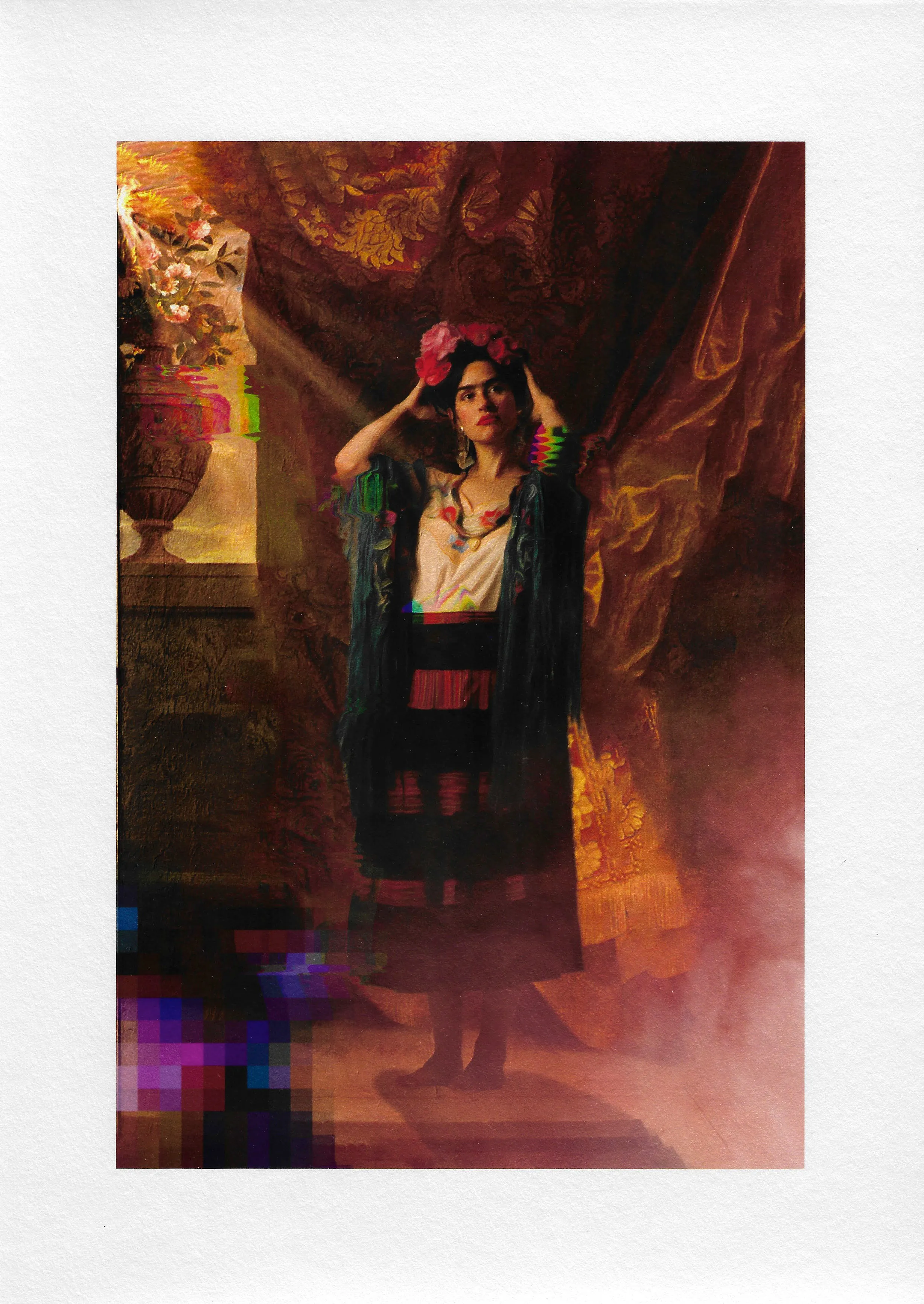
Rewind Collective is an activist art collective of photographers, fine artists and digital creatives, working to address imbalances in representation in the contemporary art field. Through the creation of new digital artworks that respond to existing works from art history, the collective uplifts women and other marginalized groups within the field. The mobilizing theory of the collective is that technology can be used effectively as a tool to bring inequities in the art field into focus for viewers, collectors, curators and institutional power brokers. For example, the group’s Remember Us series deploys images of historical artworks and artists in their studios, digitally altering and blending them together to center minority artists who have been overlooked by the traditional Western art historical canon. A statement from the anonymous collective asserts, “Our mission is to rewind back the patriarchy, misogyny, and segregation, and shine a light on those who deserve to be seen and heard.”
-
Rewind Collective
Imprint Series - Frida Kahlo #1, 2022
Giclée print on Hahnemühle photo rag metallic paper
11.69 x 8.27 in
29.7 x 21 cmEdition of 15 plus 5 artist's proofs
-
Rewind Collective has collaborated with major institutions, most notably Christie’s—where they produced a suite of digital works for Trailblazers: Centuries of Female Abstraction, responding directly to physical works by Helen Frankenthaler, Elaine de Kooning, Grace Hartigan, and others. Their projects have been featured internationally through exhibitions with Amar Singh's Gallery, Institut, as well as partnerships with LVMH and VeVe, including the Pride digital series supporting LGBTQ+ youth organizations. Recognized for merging activism with emerging technologies, the collective’s work has been covered by leading media outlets such as Forbes, Wallpaper, and Artnet, and is widely regarded as advancing a model of digital practice in which image-making, and collective authorship operate as tools of social justice and cultural repair.
-
MICHAEL JOO
-
-
Michael Joo is a conceptual artist whose work is rooted in an examination of perception. He is more interested in the way we perceive than what it is we are looking at. Joo’s multi-disciplinary studio practice mobilizes intense scientific research, ontology, epistemology, and entropy, creating a cross-disciplinary and multidimensional dialogue that results in aesthetic phenomena that document the process of their creation. The hybrid aspect of Joo’s aesthetic language reflects his own history. Born to Korean parents in the United States, Joo was raised in a multicultural environment that was influenced by a range of interests including science, academia, and artistry. By juxtaposing humanity’s various pools of knowledge and culture, Joo addresses the fluid nature of identity, mirroring the complexity and richness of his individual identity and of the collective identity of contemporary society. By combining a range of techniques associated with sculpture, painting, photography, and printmaking, the work continually blurs the boundaries between art and science. Joo’s intention as an artist is to achieve the unachievable: to make us see an object in real life that is barely conceivable as thought alone.
-
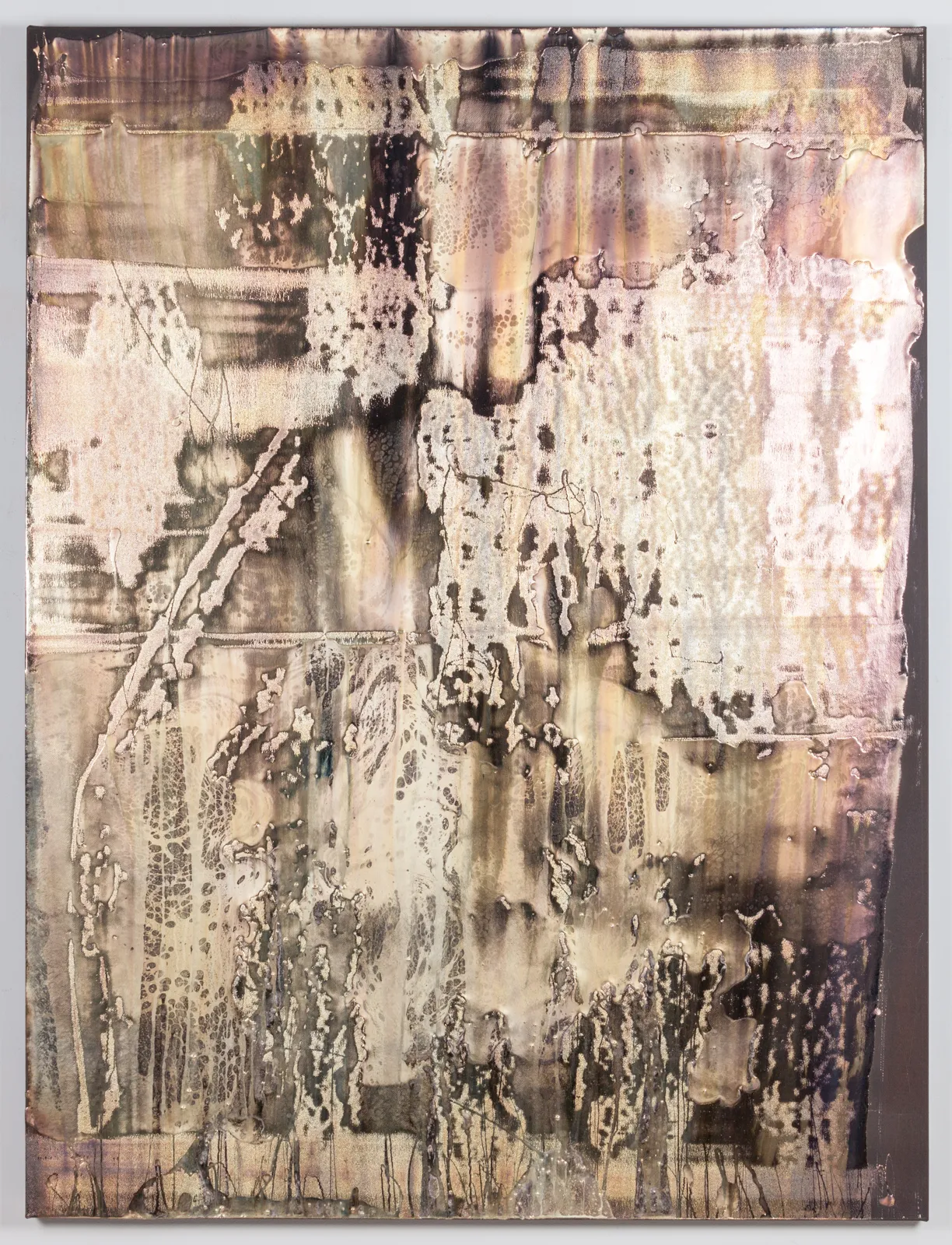
Michael Joo b. 1966
Various Low Mass Stars (NY Farm Colony 2), 2018
Silver nitrate and epoxy ink on canvas
62 x 47 x 2 in
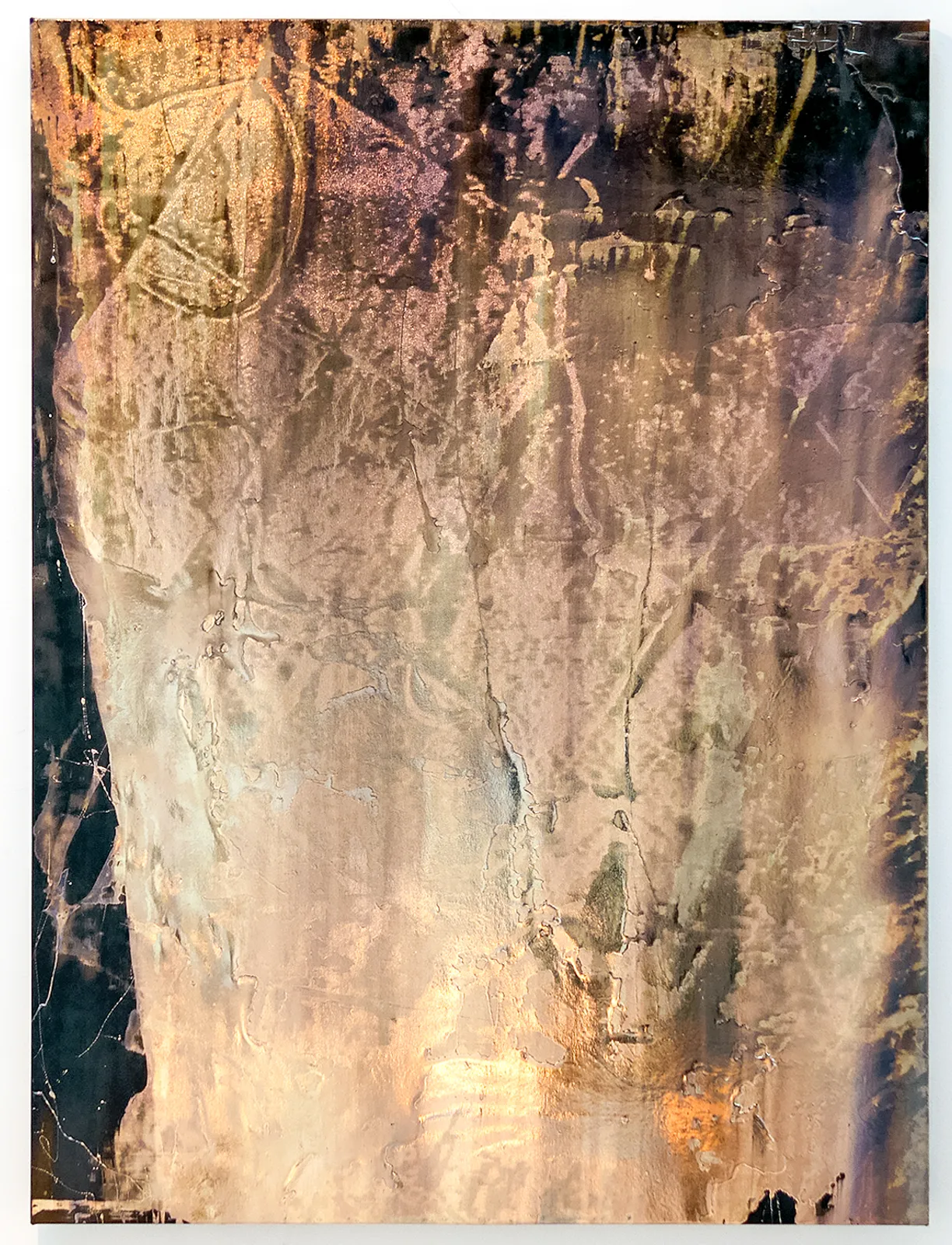
157.5 x 119.4 x 5.1 cmThis painting belongs to Michael Joo's Various Low Mass Stars series of silver-nitrate paintings, which was derived from squatted architectural ruins and created in situ by exposure to the elements over the course of several days. The series examines how site is a place for encounters as well as explorations, and how time and absence affect representation and reality.
“For me, these works deal with the origins of painting not merely as something plastic, but as fragile, frozen moments emblematic of encounters at the intersection of time, material, and process,” says Joo. “It’s always the marriage of meaning and material that interests me—how we get there, and what possible other avenues of meaning we might find within our expectations of and responses to objects and each other.”
In an interview for Studio International, Joo talked about his use of this unusual medium:
"I guess I first encountered it in the laboratory as a test for aldehydes, but, technical stuff aside, it reappeared ironically for me lightyears later, or so it seemed, when I was in Venice (15 or 20 years ago, now). I had no intention of working in glass, but I was brought into some great craftpersons’ studios—I’m a big fan, of course, of all the pyrotechnics involved within the process of work [methods], and there are not many that can rival glass-making. Some of the glass mirroring I first came across was in an out-of-the-way glass studio in Murano. Watching the process [of treating glass with silver nitrate to create the mirroring] was incredible. It was created with no safety equipment and very gracefully done, quite cavalier—not only managing to not get silver nitrate poisoning, but done with grace and familiarity. I was drawn to the combination of the performative aspect of mirroring the glass and the chemical science; it was perhaps alchemical. Watching the traditional transformation process recalls the past, but also looks to the future of mirror in technology in the performative ballet that they had perfected."
At the heart of this work is the question: Why do we perceive as we perceive? Joo’s non-linear, almost cyclical approach to his practice, together with his combination of scientific language and research, results in work that is a documentation of process. Whether chemically treated, silver-coated or photo-based, Joo’s artwork combines a range of techniques associated with sculpture, painting, photography, and printmaking. He continues to blur the boundaries between art and science through his investigation into ontology, epistemology, and entropy, creating a cross-disciplinary and multi-dimensional dialogue to engage, question, meditate, and explore. By juxtaposing humanity’s various pools of knowledge and culture, Joo addresses the fluid nature of identity itself. It seems as if the artist’s intention is to achieve the unachievable: to make us see an object in real life that is barely conceivable as thought alone.
-
Michael Joo b. 1966
Uniformitarian Assumptions (Yes), 2017
Resin and lunar caustic silver on canvas
62 x 46 x 1 1/2 in
157.5 x 116.8 x 3.8 cm -
Michael Joo b. 1966
All One Thing, 2020
Plastic 3D print
11 x 15 x 10 in
27.9 x 38.1 x 25.4 cmThis work comes from a series of three sculptures Michael Joo created for the exhibition Sensory Meridian at Kavi Gupta. The sculptures are of disincarnate body parts, alchemized from scans of historical works in the Smithsonian Archives. All One Thing features the fist of Abraham Lincoln, copied from a form originally cast on the campaign trail. What’s missing is the broom handle Lincoln had to grip in order to make a fist, after reportedly shaking so many hands that he lost muscle control. The work evolved out of Joo thinking about representation, transmission, and transformation. What, and who, gets represented in art and science and history? What information is being transmitted, and how—and how to modes of transmission affect who ultimately receives and understands that information? How are meaning and materials transformed, and how does their transformation affect representation and the transmission of information?
-
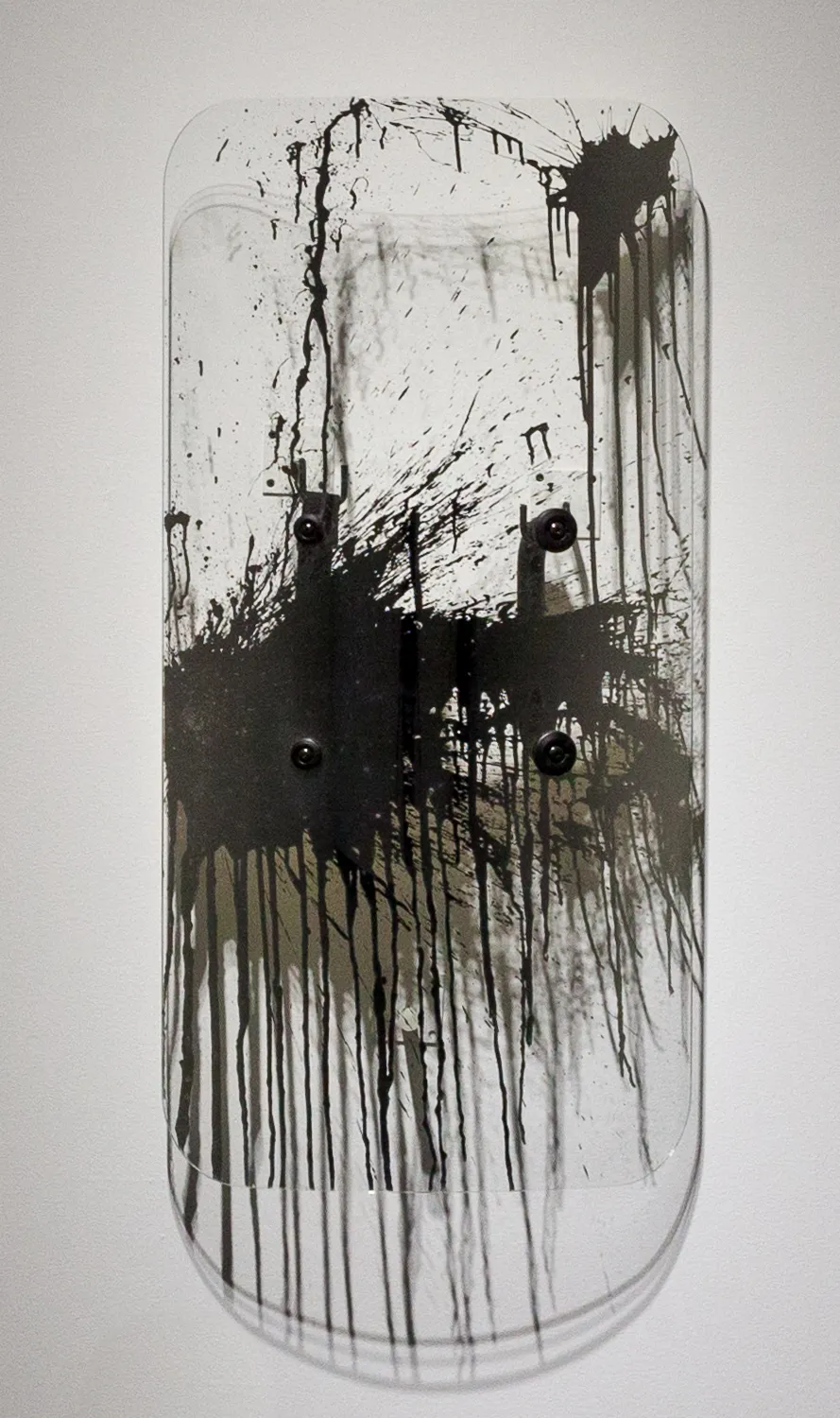
Michael Joo b. 1966
Untitled (9.27.13), 2013
Silvered low-iron glass
48 x 24 x 7 in
121.9 x 61 x 17.8 cmA glass riot shield, splattered, and silvered to a reflective surface: a tool of social control, and a symbol for the demarcation of social values, transformed into a delicate vehicle for introspection. The physical form of Untitled (9.27.13) (2013) can't help but remind us of resistance and battle, yet Joo would like us to imagine that the meanings and purposes of physical reality need not be fixed; nor must our relationships to science, nature, and each other.
Why do we perceive as we perceive? Michael Joo (b. 1966, USA) has a non-linear, almost cyclical approach to his practice. Together with his combination of scientific language and research, this results in work that is a documentation of process.
Whether chemically treated, silver-coated or photo-based, Joo’s artwork combines a range of techniques associated with sculpture, painting, photography and print-making. He continues to blur the boundaries between art and science through his investigation into ontology, epistemology and entropy; creating a cross-disciplinary and multi-dimensional dialogue to engage, question, meditate and explore.
-
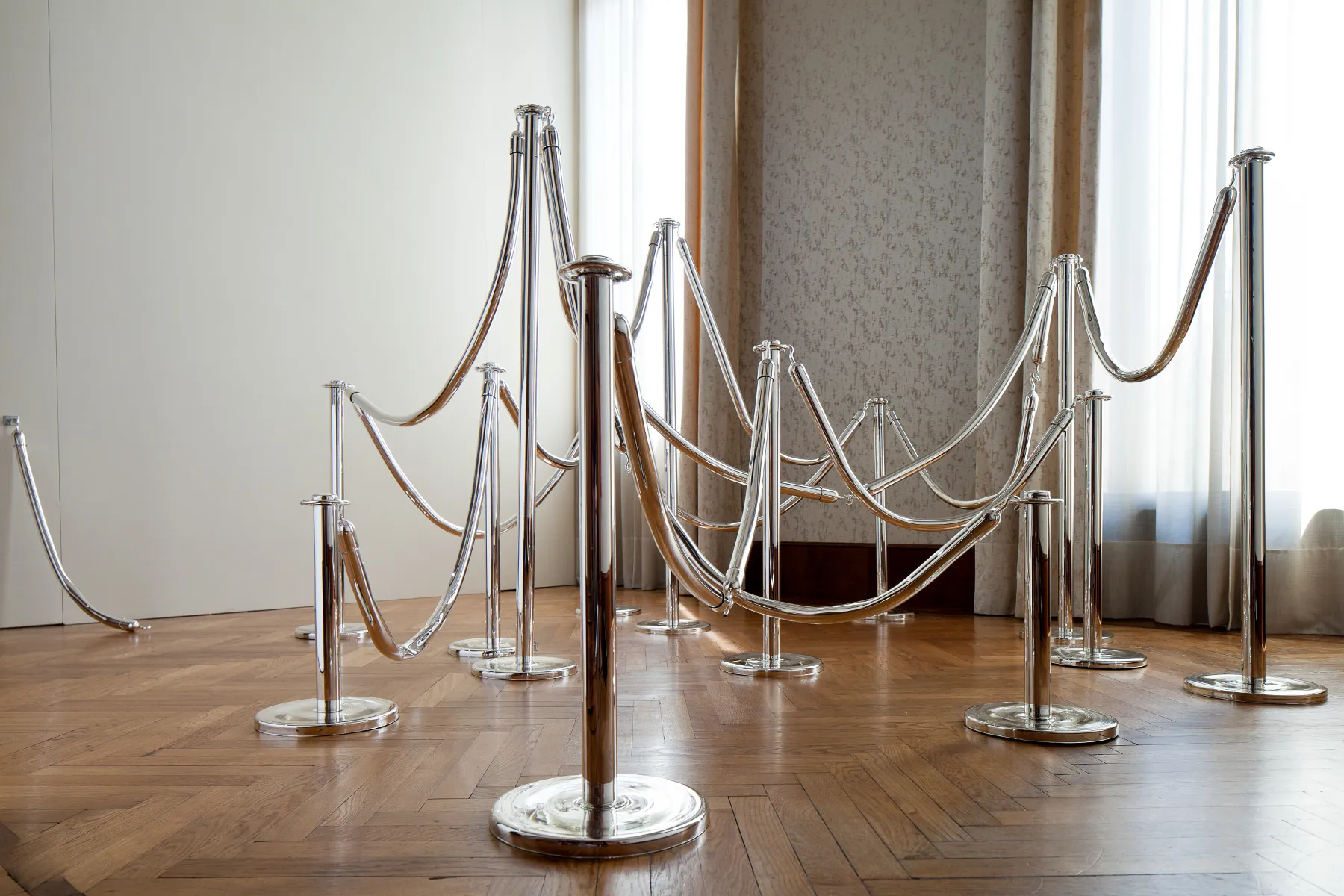
Michael Joo b. 1966
Untitled, 2012–2019
Borosilicate glass, silver nitrate, lacquer
62 x 45 x 55 in
157.5 x 114.3 x 139.7 cmMade from mirrored blown glass, this installation recreates velvet ropes that typically separate elite crowds from the rest, arranged in a maze-like formation but including an open point for entry. dramatically illuminated by overhead spotlights, these fragile stanchions explore the dichotomy of exclusivity and inclusion.
The stanchion delineates territory, symbolizes exclusion, suggests insiders and outsiders. By endowing forms traditionally connected to strength with material realities that declare fragility, Joo exposes the gap between outer appearances and inner truths, and illuminates the contrast between what is strong and what can easily collapse.
-
Variable Installation View; Untitled, 2012–2019 Borosilicate glass, silver nitrate, lacquer 62 x 45 x 55 in 157.5 x 114.3 x 139.7 cm
-
Major exhibitions of Joo's work include Sweat Models 1991–2026 at Space ZeroOne, New York, NY; the Hawai‘i Triennial HT22, Bishop Museum, Honolulu, HI; Perspectives: Michael Joo, Smithsonian Freer | Sackler Museum, Washington, DC, USA; 49th Venice Biennale, Korean Pavilion, Italy; Sensory Meridian, Kavi Gupta, Chicago, IL, USA; Michael Joo, Conserving Momentum (Egg/Gyro/Laundry Room), White Cube London, UK; Michael Joo: Drift, The Aldrich Contemporary Art Museum, Ridgefield, CT, USA; Michael Joo: Drift (Bronx), The Bronx Museum of Arts, New York, NY, USA; Michael Joo, Doppelganger, Cass Sculpture Foundation, Sussex, UK; and Michael Joo Retrospective, Palm Beach Institute of Contemporary Art, Palm Beach, CA, USA.
Joo is a Senior Critic in Sculpture at Yale University and teaches in the Columbia University MFA program. His work is in the permanent collections of the Guggenheim Museum, MoMA, and Whitney Museum of American Art in New York; Denver Art Museum; Hammer Museum, Los Angeles; Walker Art Center, Minneapolis; and Moderna Museet, Stockholm, Sweden, among others. In 2026, Joo's work was selected to be prominently featured in the 61st International Art Exhibition of La Biennale di Venezia by Koyo Kouoh.
-
KARIM ABU SHAKRA
-
-
Born in Umm al‑Fahm, Karim Abu Shakra emerges from a deeply rooted tradition of creativity. Raised in an artistic family, his path was profoundly shaped by the legacy of his late uncle Asim Abu Shakra — whose cactus-laden canvases spoke quietly yet powerfully of exile, displacement, and identity.
After graduating from the arts program at Beit Berl College, Karim embarked on a journey to translate memory, belonging, and longing into colour and form. His oeuvre — primarily oil and acrylic on canvas — moves fluidly between figuration and abstraction, blending surreal imagery, folkloric echoes, and vivid painterly energy.
At the heart of his work lies a symbolic lexicon: cacti, olive branches, birds, whales — shapes that resist a singular reading and invite contemplation. The cactus, or sabra, stands out as a signature motif: a plant that endures harsh terrain, rooted yet resilient. In Karim’s hands it becomes not a static symbol but a living emblem of survival, hope, and continuity — a visual metaphor for people who remain, remember, and resist.
But Karim’s imagery seldom remains literal. In series such as Metamorphosis, plants, animals, and humans converge in hybrid forms — cactus-cockatoos, fish drifting above seated men, whales carried in the sky — unsettling yet soulful. These works challenge the boundaries between the human and the natural, the familiar and the uncanny, suggesting that identity, memory, and existence are fluid terrains.
-
Karim Abu Shakra b. 1982
Cactus in Blue, 2021
Oil on canvas
19 5/8 x 13 3/4 in.
(50 x 35 cm)Karim Abu Shakra was born in Umm al-Fahm and belongs to a generation of artists working in the charged space between lived experience and inherited narrative. Educated at Bezalel Academy in Jerusalem, his practice has long been anchored in a return to the same modest subject, one his late uncle was intently focused on as well.
In Abu Shakra’s work, the cactus is a form that carries weight culturally, historically, and personally. In the landscape from which it emerges, the cactus has come to mark sites of continuity and rupture alike, growing where structures no longer stand, persisting where other forms have disappeared. Abu Shakra approaches this symbol without didacticism. Instead, he allows its presence to unfold by repetition, variation, of a single subject through the sustained act of looking. The cactus is famously known as a marker of abandoned or destroyed Palestinian villages, often surviving long after houses have been destroyed, It is widely used to mark old stone terraces and property lines in rural Palestinian areas.
There is also an intimacy to the potted cactus that recurs in his work. Removed from the open landscape and brought into the studio, it becomes both an object of care and a contained fragment of something larger. This tension—between rootedness and displacement, endurance and fragility—runs quietly through the paintings.
-
Karim Abu Shakra has presented a series of solo exhibitions throughout his career, beginning with In Love with Color and Brush at Tamra Municipal Gallery in 2008, curated by Ahmed Knaan, followed by Black and White at the Palestinian National Theater, Jerusalem (2009). In 2013, he exhibited Self-Portrait at Abdaa Gallery, Kfar Yassif, curated by Ahmed Knaan. In 2015, he presented The Continuity of the Accumulation at Gallery Echat in Ramallah and The Unity of Man, Nature and Life at Umm al-Fa Ham Art Gallery, curated by Ahmed Knaan and Aida Nasrallah, with an artist’s book supported by the Israel Lottery for Culture. Subsequent solo projects include From Inside to Outside at Mahmoud Darwish Gallery, Nazareth (2016), Metamorphosis at Gallery Zawyeh, Ramallah (2017), The Thorns of Life at Mahnaim Gallery – Art Gallery, Mahnaim (2019), What Stands Opposite to the Face at Petah Tikva Museum of Art, curated by Neta Gal-Atzmon (2022), and Where Roots Touch the Light at Zawyeh Gallery, Ramallah (2025).
Abu Shakra’s work has also featured in numerous group exhibitions internationally. Key shows include Black Coffee at the Festival ‘The Holiday of Holidays’, Beit HaGefen, Haifa (2006); Memory in the Future and Future Memory in Paris, France (2008); Portraits with Aroma 2 at Yigal Alon House, Ginosar (2009); Gaza is Not Running Out, Shababik Contemporary Art Group, Gaza (2010); the Jaffa Salon of Palestinian Art, Jaffa Port (2011); The Olive in Palestinian Artat Al Saraya Gallery, Nazareth (2012); Tree Mask at Yigal Alon House, Ginosar (2012); and the ‘Palestinian Art Salon’ featuring Karim Abu Shakra – New Works (2013). Later exhibitions include My Views in the Vision of Time, Elfalesteny Fan-El Hosh, Jerusalem (2014); Roots of Identity, BOND Museum, Beirut, Lebanon (2016); Kesher, Art Kiyan, Amman (2016); The Same Place, Oranim College Gallery (2016); Shish Tzabar, Zuzu Gallery, Emek Hefer (2021); Fokat, Tel Aviv Museum of Art Point (2021); The Spirit of Man, the Spirit of Place, Ein Harod Art Center (2022); and recent shows including Fresh Paint, The Village Salon, Beit Hankin – Multidisciplinary Museum Space, Kfar Yehoshua, Kol Ha'am – War Diary, Janko Dada Museum, Ein Hod, From Palestine with Art, P1 Gallery, London (2024), In Her Image, Ramat Gan Art Museum (2025), Will There Ever Be Days, Heussenstamm-Galerie (2025), and MENASA+: Thresholds of Representation at Kavi Gupta | Washington Blvd. Chiago, IL.
-
EXHIBITIONS
-
-
MENASA+: Thresholds of Representation: Kavi Gupta | Washington Blvd. Fl. 1E
Current viewing_room